
 我要评论
我要评论前言
开发目的:
提高百万级数据插入效率。
采取方案:
利用threadpooltaskexecutor多线程批量插入。
采用技术:
- springboot2.1.1
- mybatisplus3.0.6
- swagger2.5.0
- lombok1.18.4
- postgresql
- threadpooltaskexecutor
具体实现细节
application-dev.properties添加线程池配置信息
# 异步线程配置
# 配置核心线程数
async.executor.thread.core_pool_size = 30
# 配置最大线程数
async.executor.thread.max_pool_size = 30
# 配置队列大小
async.executor.thread.queue_capacity = 99988
# 配置线程池中的线程的名称前缀
async.executor.thread.name.prefix = async-importdb-
spring容器注入线程池bean对象
@configuration
@enableasync
@slf4j
public class executorconfig {
    @value("${async.executor.thread.core_pool_size}")
    private int corepoolsize;
    @value("${async.executor.thread.max_pool_size}")
    private int maxpoolsize;
    @value("${async.executor.thread.queue_capacity}")
    private int queuecapacity;
    @value("${async.executor.thread.name.prefix}")
    private string nameprefix;

    @bean(name = "asyncserviceexecutor")
    public executor asyncserviceexecutor() {
        log.warn("start asyncserviceexecutor");
        //在这里修改
        threadpooltaskexecutor executor = new visiablethreadpooltaskexecutor();
        //配置核心线程数
        executor.setcorepoolsize(corepoolsize);
        //配置最大线程数
        executor.setmaxpoolsize(maxpoolsize);
        //配置队列大小
        executor.setqueuecapacity(queuecapacity);
        //配置线程池中的线程的名称前缀
        executor.setthreadnameprefix(nameprefix);
        // rejection-policy:当pool已经达到max size的时候,如何处理新任务
        // caller_runs:不在新线程中执行任务,而是有调用者所在的线程来执行
        executor.setrejectedexecutionhandler(new threadpoolexecutor.callerrunspolicy());
        //执行初始化
        executor.initialize();
        return executor;
    }
}
创建异步线程 业务类
@service
@slf4j
public class asyncserviceimpl implements asyncservice {
@override
    @async("asyncserviceexecutor")
    public void executeasync(list<logoutputresult> logoutputresults, logoutputresultmapper logoutputresultmapper, countdownlatch countdownlatch) {
        try{
            log.warn("start executeasync");
            //异步线程要做的事情
            logoutputresultmapper.addlogoutputresultbatch(logoutputresults);
            log.warn("end executeasync");
        }finally {
            countdownlatch.countdown();// 很关键, 无论上面程序是否异常必须执行countdown,否则await无法释放
        }
    }
}
创建多线程批量插入具体业务方法
@override
public int testmultithread() {
    list<logoutputresult> logoutputresults = gettestdata();
    //测试每100条数据插入开一个线程
    list<list<logoutputresult>> lists = converthandler.splitlist(logoutputresults, 100);
    countdownlatch countdownlatch = new countdownlatch(lists.size());
    for (list<logoutputresult> listsub:lists) {
        asyncservice.executeasync(listsub, logoutputresultmapper,countdownlatch);
    }
    try {
        countdownlatch.await(); //保证之前的所有的线程都执行完成,才会走下面的;
        // 这样就可以在下面拿到所有线程执行完的集合结果
    } catch (exception e) {
        log.error("阻塞异常:"+e.getmessage());
    }
    return logoutputresults.size();
}
模拟2000003 条数据进行测试
对了,最近我整理了上百本电子书/软件/视频以及面试题,还在持续更新中,全部免费,文档地址:
https://r86oxhhvu2.feishu.cn/wiki/zmq0wjeffirrbvk9nefcf7uknsj

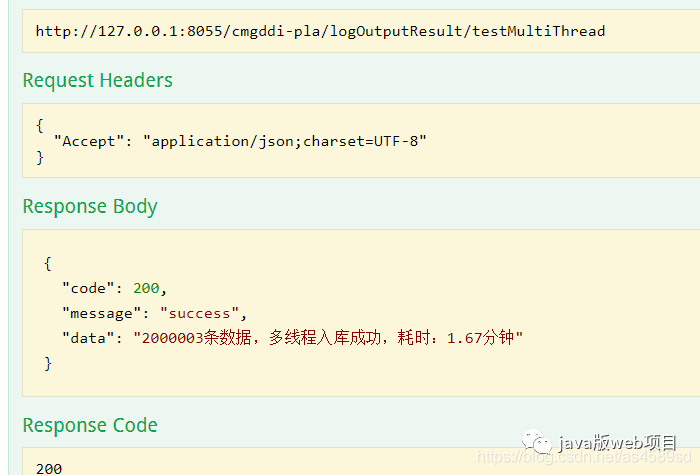
多线程 测试 2000003 耗时如下:耗时1.67分钟

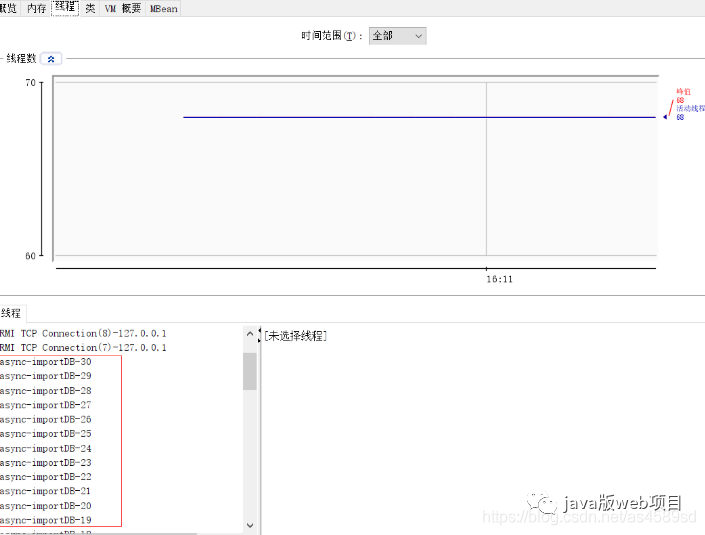
本次开启30个线程,截图如下:
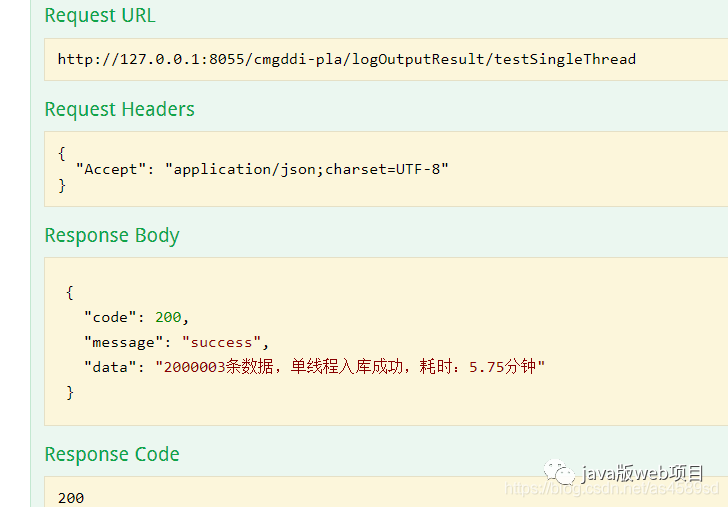
单线程测试2000003 耗时如下:耗时5.75分钟

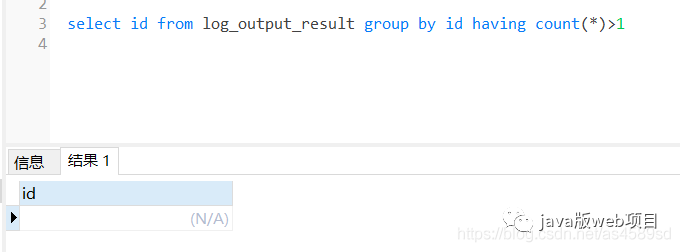
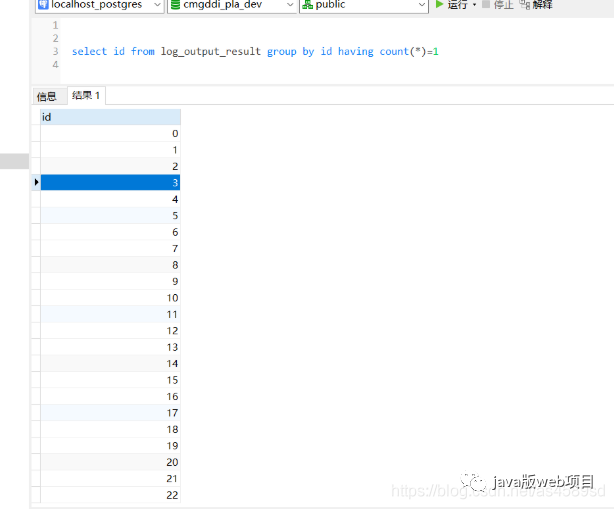
检查多线程入库的数据,检查是否存在重复入库的问题:
根据id分组,查看是否有id重复的数据,通过sql语句检查,没有发现重复入库的问题
检查数据完整性:
通过sql语句查询,多线程录入数据完整
测试结果
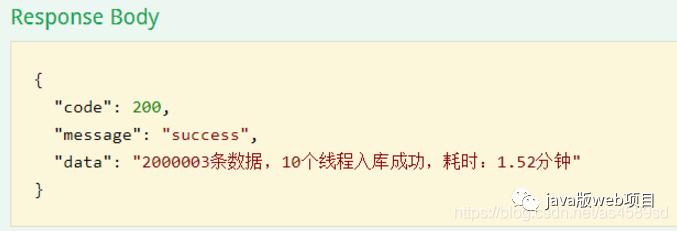
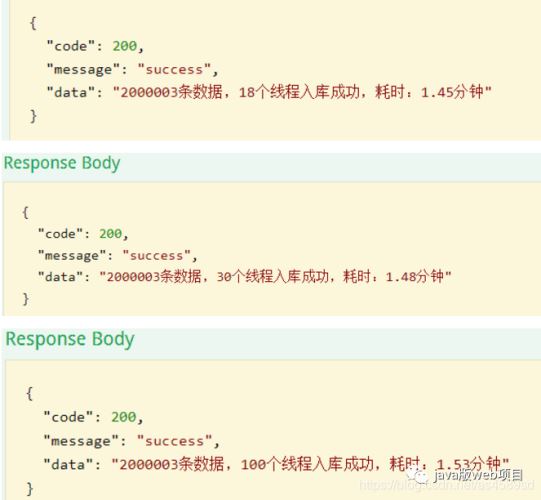
不同线程数测试:
总结
通过以上测试案列,同样是导入2000003 条数据,多线程耗时1.67分钟,单线程耗时5.75分钟。通过对不同线程数的测试,发现不是线程数越多越好,具体多少合适,网上有一个不成文的算法:
cpu核心数量*2 +2 个线程。
以上就是springboot利用threadpooltaskexecutor批量插入百万级数据的具体实现的详细内容,更多关于springboot threadpooltaskexecutor插入数据的资料请关注代码网其它相关文章!



发表评论