
 我要评论
我要评论在电商系统中,订单的处理流程通常涉及多个步骤,每个步骤都可能有不同的业务逻辑。例如,当用户提交订单时,系统需要校验库存、验证优惠券、计算运费、处理支付、分配物流等。这些操作看似独立,但实际上具有一定的顺序依赖性。为了更好地管理这些业务逻辑,我们需要将这些流程模块化,并按需执行。
通常的做法是将所有逻辑写在一起,但这会导致代码冗长且难以维护。如果未来需要对某个步骤进行修改或者添加新的处理环节,代码变动的范围将会很大。为了避免这种情况,职责链模式提供了一个灵活、可扩展的解决方案。
什么是职责链模式?
职责链模式(chain of responsibility)是一种行为设计模式,它允许多个对象都有机会处理请求,直到其中一个对象处理成功为止。职责链模式使多个处理对象通过链式关系链接在一起,每个处理对象知道它的下一个处理对象,并且在完成自身处理后,将请求传递给下一个对象。
职责链模式的优点:
- 解耦请求发送者和接收者:请求发送者不需要知道是谁在处理请求,避免了系统中各个模块的强耦合。
- 灵活扩展:通过调整链条中的处理器顺序,或者增加新的处理器,可以灵活地扩展业务逻辑。
- 动态组合:职责链的处理器可以动态组合,可以根据不同的需求创建不同的链条。
适用场景:
- 需要对请求进行一系列处理,并且请求处理者不明确或不固定时。
- 多个对象可以处理同一个请求,具体由运行时动态决定哪个对象来处理。
职责链模式在电商订单流程中的应用
在电商系统中,职责链模式可以将订单处理过程中的各个环节(如库存校验、优惠券核验、支付处理等)封装为独立的处理器,并通过职责链将这些处理器串联起来。每个处理器独立处理其对应的任务,处理完成后将请求传递给下一个处理器,直到所有处理环节完成或者中断。
运行效果:
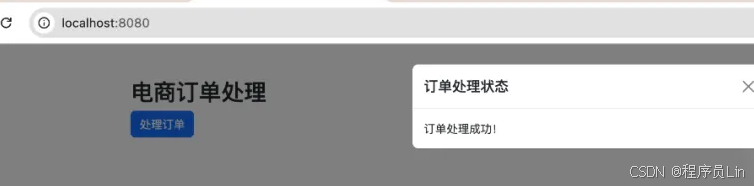
本文将深入探讨如何通过职责链模式来处理电商订单流程,并结合 spring boot 3.3 和前后端代码示例,展示如何实现这一模式。同时,前端使用 jquery 调用后端 json 接口,并通过 bootstrap 提示用户订单处理的结果。
pom 文件配置
项目中我们需要使用 spring boot 和 thymeleaf 模板引擎,具体依赖配置如下:
<?xml version="1.0" encoding="utf-8"?>
<project xmlns="http://maven.apache.org/pom/4.0.0" xmlns:xsi="http://www.w3.org/2001/xmlschema-instance"
	xsi:schemalocation="http://maven.apache.org/pom/4.0.0 https://maven.apache.org/xsd/maven-4.0.0.xsd">
	<modelversion>4.0.0</modelversion>
	<parent>
		<groupid>org.springframework.boot</groupid>
		<artifactid>spring-boot-starter-parent</artifactid>
		<version>3.3.3</version>
		<relativepath/> <!-- lookup parent from repository -->
	</parent>
	<groupid>com.icoderoad</groupid>
	<artifactid>order-chain</artifactid>
	<version>0.0.1-snapshot</version>
	<name>order-chain</name>
	<description>demo project for spring boot</description>
	<properties>
		<java.version>17</java.version>
	</properties>
	<dependencies>
		<!-- spring boot 依赖 -->
        <dependency>
            <groupid>org.springframework.boot</groupid>
            <artifactid>spring-boot-starter-web</artifactid>
        </dependency>
        <!-- thymeleaf 模板引擎 -->
        <dependency>
            <groupid>org.springframework.boot</groupid>
            <artifactid>spring-boot-starter-thymeleaf</artifactid>
        </dependency>
         <!-- lombok 插件 -->
        <dependency>
            <groupid>org.projectlombok</groupid>
            <artifactid>lombok</artifactid>
            <optional>true</optional>
        </dependency>
		<dependency>
			<groupid>org.springframework.boot</groupid>
			<artifactid>spring-boot-starter-test</artifactid>
			<scope>test</scope>
		</dependency>
	</dependencies>
	<build>
		<plugins>
			<plugin>
				<groupid>org.springframework.boot</groupid>
				<artifactid>spring-boot-maven-plugin</artifactid>
			</plugin>
		</plugins>
	</build>
</project>
配置文件 application.yml
使用 @configurationproperties 读取订单处理链的配置步骤:
order:
  chain:
    steps:
      - "ordervalidationhandler"
      - "verifycouponhandler"
      - "shippingfeehandler"
      - "totalamounthandler"
      - "processpaymenthandler"
订单处理职责链实现
为了优化 handler 方法,可以结合订单的处理流程,对不同的 handler 进行职责分工,比如验证订单信息、处理优惠券、计算运费和最终结算等步骤。我们可以使用职责链模式(chain of responsibility)将这些不同的处理逻辑独立封装在各自的 handler 类中,并且每个 handler负责处理其自身的逻辑,处理完后将处理流程交给下一个 handler。
我们将实现以下几个 handler:
- 订单验证处理器(
ordervalidationhandler):负责验证订单的基本信息,比如商品是否存在、库存是否充足等。 - 优惠券处理器(
couponhandler):负责处理优惠券的校验和折扣计算。 - 运费处理器(
shippingfeehandler):负责计算订单的运费。 - 总金额处理器(
totalamounthandler):负责计算订单的总金额。 - 支付处理器( paymenthandler`):负责订单支付功能。
每个 handler 类都遵循职责链的接口,将逻辑封装在 handler 中,最后调用下一个 handler。
订单请求类 orderrequest.java
package com.icoderoad.orderchain.entity;
import java.math.bigdecimal;
import java.util.list;
import lombok.data;
@data
public class orderrequest {
    // 商品列表
    private list<product> productlist;
    // 用户使用的优惠券
    private string couponcode;
    // 运费
    private bigdecimal shippingfee;
    // 订单总金额
    private bigdecimal totalamount;
    public orderrequest() {}
    // 构造方法
    public orderrequest(list<product> productlist, string couponcode, bigdecimal shippingfee, bigdecimal totalamount) {
        this.productlist = productlist;
        this.couponcode = couponcode;
        this.shippingfee = shippingfee;
        this.totalamount = totalamount;
    }
    // 计算订单总金额(含运费和扣除优惠)
    public bigdecimal calculatetotalamount() {
        bigdecimal producttotal = productlist.stream()
                .map(product -> product.getprice().multiply(bigdecimal.valueof(product.getquantity())))
                .reduce(bigdecimal.zero, bigdecimal::add);
        // 简单模拟优惠金额
        bigdecimal discount = (couponcode != null && !couponcode.isempty()) ? bigdecimal.valueof(10) : bigdecimal.zero;
        return producttotal.add(shippingfee).subtract(discount);
    }
    @data
    // 商品类
    public static class product {
        private string productid;
        private string name;
        private int quantity;
        private bigdecimal price;
        // 构造方法
        public product(string productid, string name, int quantity, bigdecimal price) {
            this.productid = productid;
            this.name = name;
            this.quantity = quantity;
            this.price = price;
        }
    }
}
抽象处理器类 orderhandler.java
package com.icoderoad.orderchain.handler;
import com.icoderoad.orderchain.entity.orderrequest;
public abstract class orderhandler {
    protected orderhandler nexthandler;
    // 设置下一个处理器
    public void setnexthandler(orderhandler nexthandler) {
        this.nexthandler = nexthandler;
    }
    // 抽象方法,处理订单
    public abstract void handle(orderrequest request);
}
具体处理器实现
库存校验处理器 ordervalidationhandler
package com.icoderoad.orderchain.handler;
import org.springframework.stereotype.component;
import com.icoderoad.orderchain.entity.orderrequest;
@component
public class ordervalidationhandler extends orderhandler {
    @override
    public void handle(orderrequest orderrequest) {
        // 验证商品列表是否为空
        if (orderrequest.getproductlist() == null || orderrequest.getproductlist().isempty()) {
            throw new illegalargumentexception("订单中没有商品");
        }
        // 验证每个商品的库存(此处为模拟逻辑)
        for (orderrequest.product product : orderrequest.getproductlist()) {
            if (product.getquantity() <= 0) {
                throw new illegalargumentexception("商品库存不足: " + product.getname());
            }
        }
        system.out.println("订单验证通过");
        // 调用下一个处理器
        if (nexthandler != null) {
            nexthandler.handle(orderrequest);
        }
    }
}
优惠券核验处理器 verifycouponhandler.java
package com.icoderoad.orderchain.handler;
import java.math.bigdecimal;
import org.springframework.stereotype.component;
import com.icoderoad.orderchain.entity.orderrequest;
@component
public class verifycouponhandler extends orderhandler {
    @override
    public void handle(orderrequest orderrequest) {
        string couponcode = orderrequest.getcouponcode();
        // 简单模拟优惠券验证逻辑
        if (couponcode != null && !couponcode.isempty()) {
            // 假设优惠券折扣金额为 10
            bigdecimal discount = new bigdecimal("10.00");
            system.out.println("使用优惠券: " + couponcode + ",折扣金额: " + discount);
        } else {
            system.out.println("未使用优惠券");
        }
        // 调用下一个处理器
        if (nexthandler != null) {
            nexthandler.handle(orderrequest);
        }
    }
}
运费处理器
package com.icoderoad.orderchain.handler;
import java.math.bigdecimal;
import org.springframework.stereotype.component;
import com.icoderoad.orderchain.entity.orderrequest;
@component
public class shippingfeehandler extends orderhandler {
    @override
    public void handle(orderrequest orderrequest) {
        // 简单模拟运费计算逻辑
        bigdecimal shippingfee = orderrequest.getshippingfee();
        system.out.println("运费: " + shippingfee);
        // 调用下一个处理器
        if (nexthandler != null) {
            nexthandler.handle(orderrequest);
        }
    }
}
总金额处理器
package com.icoderoad.orderchain.handler;
import java.math.bigdecimal;
import org.springframework.stereotype.component;
import com.icoderoad.orderchain.entity.orderrequest;
@component
public class totalamounthandler extends orderhandler {
    @override
    public void handle(orderrequest orderrequest) {
        // 计算订单总金额
        bigdecimal totalamount = orderrequest.calculatetotalamount();
        orderrequest.settotalamount(totalamount);
        system.out.println("订单总金额: " + totalamount);
        // 调用下一个处理器(如果有)
        if (nexthandler != null) {
            nexthandler.handle(orderrequest);
        }
    }
}
支付处理器 processpaymenthandler.java
package com.icoderoad.orderchain.handler;
import org.springframework.stereotype.component;
import com.icoderoad.orderchain.entity.orderrequest;
@component
public class processpaymenthandler extends orderhandler {
    @override
    public void handle(orderrequest request) {
        // 支付处理逻辑
        system.out.println("正在处理支付...");
        // 支付完成,职责链结束
    }
}
初始化职责链 orderchainconfig.java
package com.icoderoad.orderchain.config;
import java.util.hashmap;
import java.util.list;
import java.util.map;
import org.springframework.boot.context.properties.configurationproperties;
import org.springframework.context.annotation.bean;
import org.springframework.context.annotation.configuration;
import com.icoderoad.orderchain.handler.orderhandler;
import com.icoderoad.orderchain.handler.ordervalidationhandler;
import com.icoderoad.orderchain.handler.processpaymenthandler;
import com.icoderoad.orderchain.handler.shippingfeehandler;
import com.icoderoad.orderchain.handler.totalamounthandler;
import com.icoderoad.orderchain.handler.verifycouponhandler;
@configuration
@configurationproperties(prefix = "order.chain")
public class orderchainconfig {
    private list<string> steps;
    // 将处理器的映射存储在一个集合中
    private final map<string, orderhandler> handlermap = new hashmap<>();
    public orderchainconfig(list<orderhandler> handlers) {
        // 初始化处理器映射
        handlermap.put("ordervalidationhandler", handlers.stream().filter(h -> h instanceof ordervalidationhandler).findfirst().orelse(null));
        handlermap.put("verifycouponhandler", handlers.stream().filter(h -> h instanceof verifycouponhandler).findfirst().orelse(null));
        handlermap.put("shippingfeehandler", handlers.stream().filter(h -> h instanceof shippingfeehandler).findfirst().orelse(null));
        handlermap.put("totalamounthandler", handlers.stream().filter(h -> h instanceof totalamounthandler).findfirst().orelse(null));
        handlermap.put("processpaymenthandler", handlers.stream().filter(h -> h instanceof processpaymenthandler).findfirst().orelse(null));
    }
    @bean(name = "orderchain")
    public orderhandler orderchain() {
        if (steps == null || steps.isempty()) {
            throw new illegalargumentexception("处理链步骤不能为空");
        }
        // 动态创建处理链
        orderhandler firsthandler = null;
        orderhandler lasthandler = null;
        for (string step : steps) {
            orderhandler handler = handlermap.get(step);
            if (handler == null) {
                throw new illegalargumentexception("未找到处理器: " + step);
            }
            if (firsthandler == null) {
                firsthandler = handler;
            }
            if (lasthandler != null) {
                lasthandler.setnexthandler(handler);
            }
            lasthandler = handler;
        }
        if (lasthandler != null) {
            lasthandler.setnexthandler(null); // 最后一个处理器的 nexthandler 设置为 null
        }
        return firsthandler;
    }
    public void setsteps(list<string> steps) {
        this.steps = steps;
    }
}
说明
- 处理器映射:使用
map<string, orderhandler>来存储处理器实例,通过handlers列表动态注入。这允许我们在配置中使用字符串名称引用处理器实例。 - 动态创建处理链:在
orderchain方法中,根据steps配置的顺序动态创建处理链。每个处理器根据配置连接到下一个处理器。 - 配置检查:确保
steps配置有效,不为空,并且在处理链创建时校验处理器是否存在。 - 处理器实例:在
orderchainconfig的构造函数中初始化处理器映射。确保ordervalidationhandler、verifycouponhandler、shippingfeehandler、totalamounthandler和processpaymenthandler被正确注入并配置。
控制器接口优化
在优化后的控制器中,前端调用时返回 json 数据,jquery 解析响应后通过 bootstrap 弹出提示。
package com.icoderoad.orderchain.controller;
import java.math.bigdecimal;
import java.util.arraylist;
import java.util.hashmap;
import java.util.list;
import java.util.map;
import org.springframework.beans.factory.annotation.autowired;
import org.springframework.beans.factory.annotation.qualifier;
import org.springframework.web.bind.annotation.postmapping;
import org.springframework.web.bind.annotation.restcontroller;
import com.icoderoad.orderchain.entity.orderrequest;
import com.icoderoad.orderchain.entity.orderrequest.product;
import com.icoderoad.orderchain.handler.orderhandler;
@restcontroller
public class ordercontroller {
    private final orderhandler orderhandler;
    @autowired
    public ordercontroller(@qualifier("orderchain") orderhandler orderhandler) {
        this.orderhandler = orderhandler;
    }
    @postmapping("/processorder")
    public map<string, object> processorder() {
        map<string, object> response = new hashmap<>();
        try {
            orderrequest request = new orderrequest();
         // 创建商品对象
            product product = new product("10001", "手机", 2, new bigdecimal("20000.00"));
            // 创建商品列表并添加商品
            list<product> productlist = new arraylist<>();
            productlist.add(product);
            request.setshippingfee(new bigdecimal("200.00"));
            // 将商品列表设置到 orderrequest 中
            request.setproductlist(productlist);
            orderhandler.handle(request);
            response.put("status", "success");
            response.put("message", "订单处理成功!");
        } catch (exception e) {
            response.put("status", "error");
            response.put("message", "订单处理失败:" + e.getmessage());
        }
        return response;
    }
}
前端界面及 jquery 调用 json 接口
在前端,我们使用 jquery 发起 ajax 请求,并通过 bootstrap 提示处理结果。
在 src/main/resources/templates 目录下创建 index.html 文件:
<!doctype html>
<html xmlns:th="http://www.thymeleaf.org">
<head>
    <title>订单处理</title>
    <link href="https://cdn.jsdelivr.net/npm/bootstrap@5.3.0/dist/css/bootstrap.min.css" rel="stylesheet">
</head>
<body>
<div class="container mt-5">
    <h2>电商订单处理</h2>
    <button class="btn btn-primary" id="processorder">处理订单</button>
</div>
<!-- 弹出提示框 -->
<div class="modal fade" id="ordermodal" tabindex="-1" aria-labelledby="ordermodallabel" aria-hidden="true">
    <div class="modal-dialog">
        <div class="modal-content">
            <div class="modal-header">
                <h5 class="modal-title" id="ordermodallabel">订单处理状态</h5>
                <button type="button" class="btn-close" data-bs-dismiss="modal" aria-label="close"></button>
            </div>
            <div class="modal-body">
                <!-- 动态显示订单处理结果 -->
            </div>
        </div>
    </div>
</div>
<script src="https://code.jquery.com/jquery-3.6.0.min.js"></script>
<script src="https://cdn.jsdelivr.net/npm/bootstrap@5.3.0/dist/js/bootstrap.bundle.min.js"></script>
<script>
    $(document).ready(function() {
        $("#processorder").click(function() {
            $.ajax({
                url: '/processorder',
                type: 'post',
                success: function(response) {
                    // 根据返回状态显示提示
                    $(".modal-body").text(response.message);
                    $('#ordermodal').modal('show');
                }
            });
        });
    });
</script>
</body>
</html>
总结
通过职责链模式,我们可以将复杂的订单处理流程解耦成多个独立的步骤,提升了代码的可维护性和扩展性。每个处理环节可以灵活配置和扩展,便于后续的功能迭代。同时,结合 spring boot 和前后端交互技术,进一步增强了系统的可用性与用户体验。
今天就讲到这里,如果有问题需要咨询,大家可以直接留言,我们会尽力为你解答。
到此这篇关于spring boot 3.3 实现职责链模式,轻松应对电商订单流程的文章就介绍到这了,更多相关spring boot 职责链模式内容请搜索代码网以前的文章或继续浏览下面的相关文章希望大家以后多多支持代码网!


发表评论