
 我要评论
我要评论一、什么是线程池预热?
线程池第一次执行任务时会:
- 创建核心线程
- 加载类
- jit 编译热点方法
- 建立资源连接(db / redis / rpc)
这些都需要时间,因此第一次执行任务一般比后续慢很多。
线程池预热(warm-up)就是:
✔ 在系统启动时提前创建线程
✔ 并让线程执行一次轻量任务
使其进入 已加载、已编译、已就绪 的状态。
二、demo:不开启预热 vs 开启预热
我们做两个测试:
- 未预热 → 首次任务延迟明显更高
- 预热后 → 首次任务也能保持正常速度
三、测试代码
以下代码包含两个方法:
① testwithoutwarmup() 未预热
② testwithwarmup() 已预热
完整可运行 demo:threadpoolwarmupdemo.java
import java.util.concurrent.*;
import java.util.concurrent.atomic.atomicboolean;

public class threadpoolwarmupdemo {

    public static void main(string[] args) throws exception {
        system.out.println("========== 未开启预热,测试开始 ==========");
        testwithoutwarmup();

        system.out.println("\n========== 开启预热后,测试开始 ==========");
        testwithwarmup();
    }

    /** 用于模拟“第一次慢,后面快” */
    private static final atomicboolean firstrun = new atomicboolean(true);

    /** 模拟核心业务逻辑 */
    private static void mockbizwork() {
        try {
            if (firstrun.compareandset(true, false)) {
                // 只在第一次执行时慢
                thread.sleep(50);
            } else {
                // 后续任务很快
                thread.sleep(2);
            }
        } catch (interruptedexception e) {
            thread.currentthread().interrupt();
        }
    }

    /** 创建一个全新的线程池(关键) */
    private static threadpoolexecutor newexecutor() {
        return new threadpoolexecutor(
                4, 4,
                60, timeunit.seconds,
                new linkedblockingqueue<>()
        );
    }

    /** 未开启线程池预热 */
    public static void testwithoutwarmup() throws exception {
        threadpoolexecutor executor = newexecutor();
        firstrun.set(true);

        long start = system.currenttimemillis();

        future<long> future = executor.submit(() -> {
            long s = system.currenttimemillis();
            mockbizwork();
            return system.currenttimemillis() - s;
        });

        long firstcost = future.get();
        long totalcost = system.currenttimemillis() - start;

        system.out.println("第一次任务耗时 = " + firstcost + " ms");
        system.out.println("整体耗时(含线程创建)= " + totalcost + " ms");

        executor.shutdown();
    }

    /** 开启预热 */
    public static void testwithwarmup() throws exception {
        threadpoolexecutor executor = newexecutor();
        firstrun.set(true);

        system.out.println(">>> 开始预热核心线程...");
        executor.prestartallcorethreads();

        // 预热任务:吃掉“第一次慢”
        for (int i = 0; i < 4; i++) {
            executor.submit(threadpoolwarmupdemo::mockbizwork).get();
        }

        system.out.println(">>> 预热完成!");

        long start = system.currenttimemillis();

        future<long> future = executor.submit(() -> {
            long s = system.currenttimemillis();
            mockbizwork();
            return system.currenttimemillis() - s;
        });

        long cost = future.get();
        long totalcost = system.currenttimemillis() - start;

        system.out.println("第一次任务耗时(已预热)= " + cost + " ms");
        system.out.println("整体耗时(线程已就绪)= " + totalcost + " ms");

        executor.shutdown();
    }
}
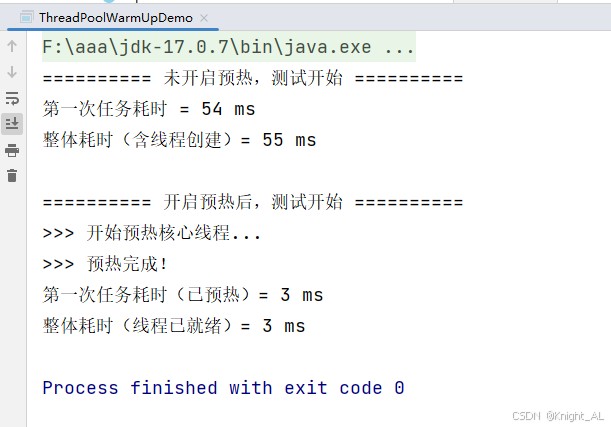
四、对比图(示例)
| 场景 | 首次任务耗时 | 备注 |
|---|---|---|
| ❄️ 未预热 | 55 ms | 包含线程创建、类加载等 |
| 🔥 已预热 | 3 ms | 线程已创建、jit 已编译,几乎“秒回” |
五、什么时候必须使用线程池预热?
以下场景建议开启:
✔ 高并发系统(交易、支付、秒杀)
首个请求慢会直接影响用户体验和系统稳定性。
✔ 微服务自动扩容(k8s / spring cloud)
pod 刚拉起来就被流量打满,如果没预热会导致:
- 错误率突然增加
- p99 延迟飙升
- 下游熔断
✔ 接口对响应时间敏感(推荐、风控、广告)
冷启动会影响模型推理链路整体延迟。
六、总结
线程池预热很简单,但效果极其明显。
👉 不预热 = 首次任务慢几十毫秒
👉 预热后 = 首次任务几毫秒完成
通过:
executor.prestartallcorethreads();
executor.submit(warmtask);
即可大幅减少冷启动延迟,保证服务稳定性和低延迟能力。
到此这篇关于java 线程池预热(warm-up)实战的文章就介绍到这了,更多相关java 线程池预热内容请搜索代码网以前的文章或继续浏览下面的相关文章希望大家以后多多支持代码网!





发表评论