
 我要评论
我要评论在日常mysql开发中,count()函数是统计数据行数的常用工具,但很多开发者对count(*)、count(字段)、count(1)的区别一知半解,也常困惑于不同存储引擎下count(*)的性能差异。本文将结合实际测试案例,从原理到实践,带你彻底搞懂count(*),并分享3种高效优化count()性能的方案。
一、测试环境搭建
为了让所有结论有数据支撑,我们先搭建统一的测试环境——创建3张不同配置的表(innodb带索引、myisam、innodb无二级索引),并插入测试数据。
1.1 建表语句与存储过程
-- 切换数据库(需提前创建martin库:create database martin;)
use martin;
-- 1. 创建innodb引擎表t1(含主键+二级索引)
drop table if exists t1;
create table `t1` (
  `id` int not null auto_increment,
  `a` int default null,  -- 允许为null,用于测试count(字段)
  `b` int not null,
  `c` int default null,
  `d` int default null,
  primary key (`id`),    -- 聚簇索引
  key `idx_a` (`a`),     -- 二级索引
  key `idx_b` (`b`)      -- 二级索引
) engine=innodb default charset=utf8mb4;
-- 2. 创建批量插入10000条数据的存储过程
drop procedure if exists insert_t1;
delimiter ;;  -- 临时修改语句结束符,避免与存储过程中的;冲突
create procedure insert_t1()
begin
declare i int;
set i=1;
while(i<=10000)do
insert into t1(a,b,c,d) values(i,i,i,i);  -- 初始数据a无null
set i=i+1;
end while;
end;;
delimiter ;  -- 恢复语句结束符
-- 3. 执行存储过程+补充1条a为null的数据
call insert_t1();
insert into t1(a,b,c,d) values (null,10001,10001,10001),(10002,10002,10002,10002);
-- 此时t1共10002行数据,其中1行a为null
-- 4. 创建myisam引擎表t2(结构与t1一致,用于对比引擎差异)
drop table if exists t2;
create table t2 like t1;
alter table t2 engine = myisam;  -- 修改引擎
insert into t2 select * from t1;  -- 同步t1数据
-- 5. 创建无二级索引的innodb表t3(用于测试索引对count(*)的影响)
drop table if exists t3;
create table `t3` (
  `id` int not null auto_increment,
  `a` int default null,
  `b` int not null,
  `c` int default null,
  `d` int default null,
  primary key (`id`)  -- 仅聚簇索引
) engine=innodb charset=utf8mb4;
insert into t3 select * from t1;
二、重新认识count(*):4个核心疑问解答
2.1 count(a)与count(*)的区别:是否统计null?
很多人误以为count(字段)和count(*)功能一致,实则关键差异在是否统计字段为null的行:
count(a):仅统计a字段不为null的行(若字段有null值,会过滤掉);count(*):统计表中所有行(无论字段是否为null,包括全null的行)。
测试验证(基于t1表,10002行,1行a为null):
-- 结果为10001(排除a为null的1行)
select count(a) from t1;
-- 结果为10002(统计所有行)
select count(*) from t1;

2.2 myisam与innodb:count(*)性能天差地别?
两种主流引擎对count(*)的处理逻辑完全不同,导致性能差异显著:
- myisam:会将表的总行数存储在磁盘(仅针对无where子句、无其他列检索的场景),查询时直接读取该值,速度极快;
- innodb:需临时扫描表/索引计算行数(因innodb支持事务,行数据可能被锁定或版本不同,无法缓存固定行数),速度较慢。
执行计划对比:
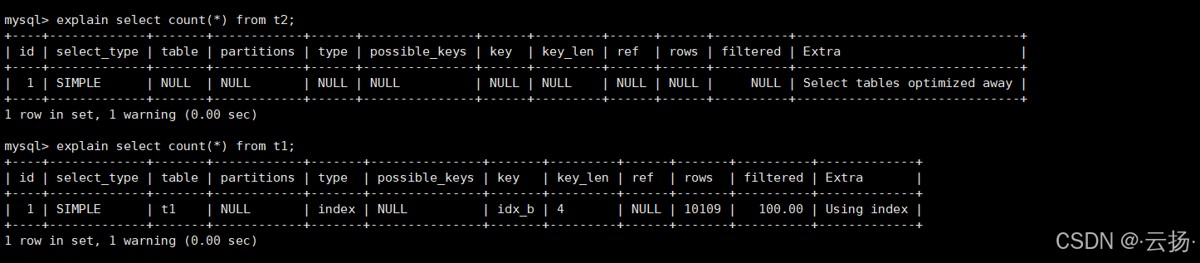
-- 1. myisam表t2的count(*):extra为select tables optimized away,核心含义是:mysql 通过优化逻辑,直接从索引中获取了所需的全部数据,完全无需访问实际的表,因此 “跳过了表的访问步骤”
explain select count(*) from t2;
-- 2. innodb表t1的count(*):type为index,表示 “全索引扫描”,而非 “全表扫描”,extra为using index,表示查询所需的所有信息都能从索引中直接获取,完全不需要回表读取行数据
explain select count(*) from t1;
从执行计划可见,myisam直接复用预存的行数,而innodb需扫描索引计算。
2.3 mysql 5.7.18+:count(*)为何优先选二级索引?
在mysql 5.7.18之前,innodb的count(*)默认扫描聚簇索引(主键索引);而5.7.18之后,优化器会优先选择最小的二级索引,原因是:
- 聚簇索引的叶子节点存储整行数据,体积较大;
- 二级索引的叶子节点仅存储主键值,体积远小于聚簇索引,扫描成本更低。
若表无二级索引(如t3表),则仍会扫描聚簇索引。

2.4 count(1)比count(*)快?谣言!
很多开发者认为count(1)性能优于count(*),实则两者结果一致、性能无差异:
count(1):将“1”视为恒真表达式,统计所有行(与count(*)逻辑一致);count(*):mysql对其有专门优化,不会展开为所有字段,而是直接统计行数。
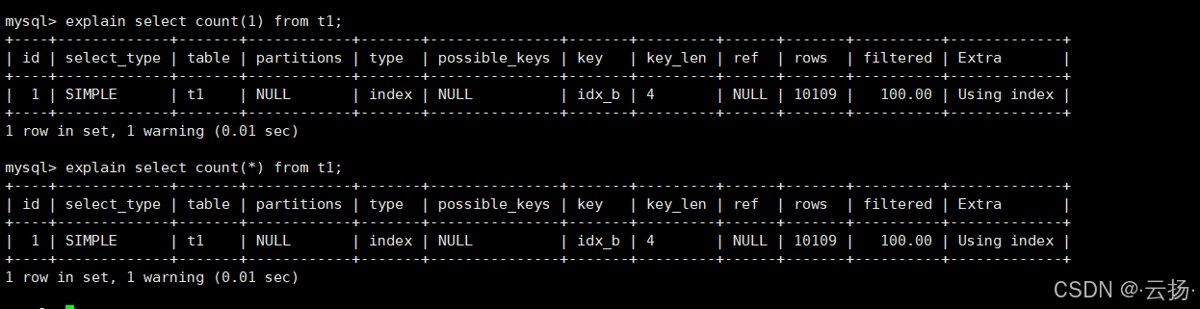
执行计划验证:
-- 两条语句的执行计划完全一致(均扫描二级索引,rows=10002)
explain select count(1) from t1;
explain select count(*) from t1;
结论:无需纠结count(1)和count(*),优先用count(*)更符合语义。
三、3种方法加快count():从“慢统计”到“快查询”
当表数据量达百万/千万级时,innodb的count(*)会明显变慢,以下3种方案可根据场景选择:
3.1 场景1:仅需“大概数据量”→ show table status
若业务无需精确行数(如后台数据概览),可使用show table status,它直接读取mysql的表元数据,无需扫描表:
-- 结果中rows字段即为表的大概行数(t1表约10002行)
show table status like 't1';
优缺点:速度极快,但数据可能有误差(误差通常在10%以内)。
3.2 场景2:需高性能+可接受少量延迟→ redis计数器
利用redis的原子操作(incr/decr)维护表行数,查询时直接读redis,避免扫描mysql表:
步骤1:初始化计数器
-- 1. 先查询mysql表的初始行数
select count(*) from t1;  -- 结果10002
-- 2. 将初始值写入redis(key为t1_count,值为10002)
set t1_count 10002;
步骤2:增删数据时同步更新计数器
-- 插入数据时,redis计数器+1
insert into t1(a,b,c,d) values (10003,10003,10003,10003);
incr t1_count;  -- redis命令
-- 删除数据时,redis计数器-1
delete from t1 where id=10003;
decr t1_count;  -- redis命令
步骤3:查询行数时读redis
-- 直接获取redis中的值,耗时微秒级
get t1_count;
优缺点:性能极高,但存在“redis与mysql数据不一致”风险(如插入mysql成功但redis更新失败),适合对一致性要求不严格的场景。
3.3 场景3:需强一致性→ 计数表(innodb)
用一张innodb表专门存储行数,通过事务保证“数据操作”与“计数更新”的原子性,彻底解决一致性问题:
步骤1:创建计数表
-- 创建count_t1表,仅存储t1的行数
create table count_t1 (
  table_name varchar(50) not null primary key,  -- 表名(可扩展到多表)
  count int not null default 0  -- 行数
);
-- 初始化t1的计数
insert into count_t1(table_name, count) values ('t1', (select count(*) from t1));
步骤2:事务中同步增删与计数
-- 插入数据时,在同一事务中更新计数
begin;  -- 开启事务
insert into t1(a,b,c,d) values (10003,10003,10003,10003);
update count_t1 set count=count+1 where table_name='t1';
commit;  -- 提交事务(要么都成功,要么都失败)
-- 删除数据时同理
begin;
delete from t1 where id=10003;
update count_t1 set count=count-1 where table_name='t1';
commit;
步骤3:查询行数时读计数表
-- 直接查询计数表,仅扫描1行,速度极快
select count from count_t1 where table_name='t1';
优缺点:强一致性、性能好,但需额外维护计数表,适合对数据一致性要求高的核心业务(如订单数统计)。
四、总结:count(*)使用与优化指南
- 基础选择:统计所有行用
count(*),统计非null字段用count(字段),无需用count(1); - 引擎差异:myisam适合静态表(行数不变),innodb需通过索引优化
count(*); - 优化方案:
- 概览数据:
show table status; - 高性能低一致性:redis计数器;
- 强一致性:innodb计数表。
- 概览数据:
掌握以上知识,可避免在mysql计数场景中踩坑,让统计逻辑既高效又可靠。
到此这篇关于mysql中count(*)深度解析与性能优化实践案例的文章就介绍到这了,更多相关mysql count(*)性能优化内容请搜索代码网以前的文章或继续浏览下面的相关文章希望大家以后多多支持代码网!




发表评论