
 我要评论
我要评论安装redis
brew install redis
开启、关闭redis
# 开启服务
brew services start redis
# 关闭服务
brew services stop redis
redis数据结构
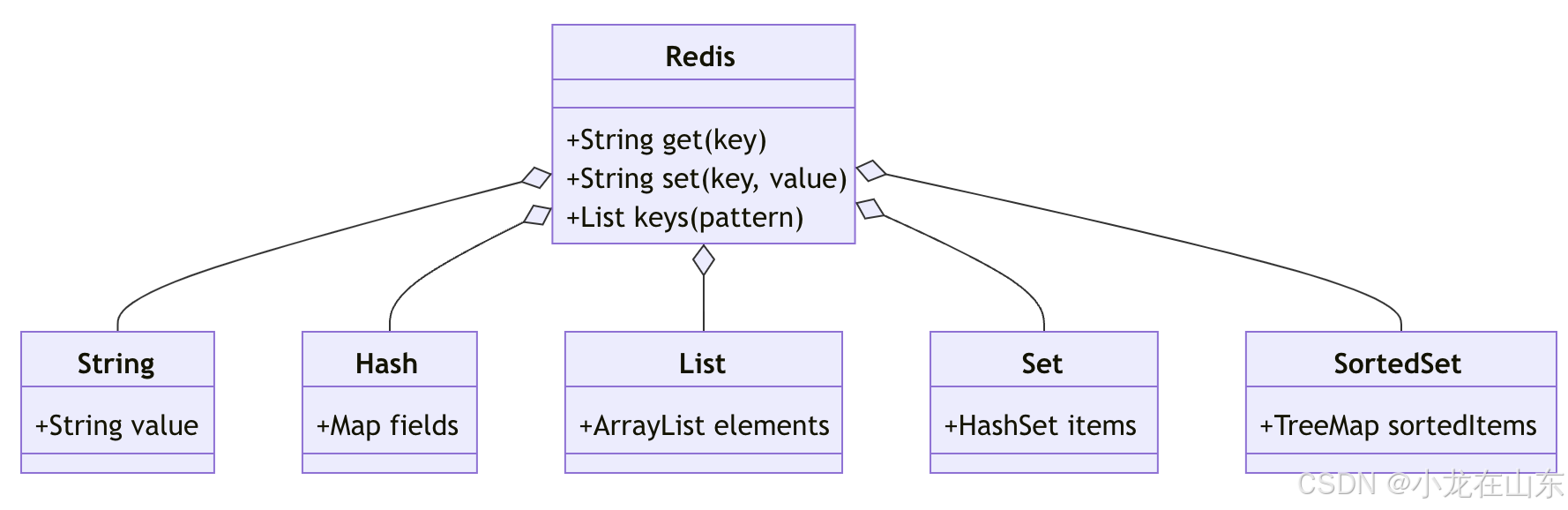
redis 支持多种数据结构,包括字符串、哈希、列表、集合和有序集合。每种数据结构都有其特定的命令和用法。以下是一个简单的类图,展示了 redis 的基本数据结构:
redis-cli操作
% redis-cli ping
pong
% redis-cli
127.0.0.1:6379> set name peter
ok
127.0.0.1:6379> get name
"peter"
127.0.0.1:6379> keys *
1) "name"

安装redis-py
redis是一种开源的内存数据结构存储,用作数据库、缓存和消息代理。redis-py是一个python客户端库,允许python程序与redis进行交互。安装包如下:
pip install redis
数据库连接和释放
要连接到redis数据库,需要提供redis服务器的主机地址和端口。
import redis

def create_connection(host='localhost', port=6379, db=0):
    connection = none
    try:
        connection = redis.redis(host=host, port=port, db=db)
        if connection.ping():
            print("connection to redis db successful")
    except redis.connectionerror as e:
        print(f"the error '{e}' occurred")

    return connection

def close_connection(connection):
    # redis-py does not require explicit close
    print("redis connection does not need to be closed explicitly")

# 使用示例
connection = create_connection()
close_connection(connection)
增删改查
在连接到数据库后,可以执行基本的redis操作,如插入、查询、更新和删除数据。
插入数据
def insert_data(connection, key, value):
    try:
        connection.set(key, value)
        print(f"data inserted: {key} -> {value}")
    except redis.rediserror as e:
        print(f"the error '{e}' occurred")

insert_data(connection, 'name', 'alice')
查询数据
def query_data(connection, key):
    try:
        value = connection.get(key)
        if value:
            print(f"data retrieved: {key} -> {value.decode('utf-8')}")
        else:
            print(f"no data found for key: {key}")
    except redis.rediserror as e:
        print(f"the error '{e}' occurred")

query_data(connection, 'name')
更新数据
redis中的set命令不仅用于插入数据,也可用于更新数据。
def update_data(connection, key, value):
    try:
        connection.set(key, value)
        print(f"data updated: {key} -> {value}")
    except redis.rediserror as e:
        print(f"the error '{e}' occurred")

update_data(connection, 'name', 'bob')
删除数据
def delete_data(connection, key):
    try:
        result = connection.delete(key)
        if result:
            print(f"data deleted for key: {key}")
        else:
            print(f"no data found for key: {key}")
    except redis.rediserror as e:
        print(f"the error '{e}' occurred")

delete_data(connection, 'name')
异常处理
处理异常是确保程序稳定性的重要部分。在上述代码中,已通过try-except块来处理可能的异常。此外,还可以进一步细化异常处理逻辑。
def create_connection(host='localhost', port=6379, db=0):
    connection = none
    try:
        connection = redis.redis(host=host, port=port, db=db)
        if connection.ping():
            print("connection to redis db successful")
    except redis.connectionerror as e:
        print("failed to connect to redis server")
    except redis.rediserror as e:
        print(f"redis error: {e}")

    return connection
redis凭借其高性能和丰富的数据结构,已成为缓存、实时数据分析和消息代理等应用场景的理想选择。掌握python与redis的交互,将极大提高在数据处理和应用开发中的效率。
到此这篇关于python中操作redis的常用方法小结的文章就介绍到这了,更多相关python操作redis内容请搜索代码网以前的文章或继续浏览下面的相关文章希望大家以后多多支持代码网!




发表评论