
 我要评论
我要评论背景
对于一些配置型数据而言,改动不是很频繁,可以在项目启动的时候直接加载到内存,避免需要数据时去查询数据库,造成不必要的io消耗
环境
- springboot
- maven
后端代码
pom依赖
        <dependency>
            <groupid>com.google.guava</groupid>
            <artifactid>guava</artifactid>
            <version>31.0.1-jre</version>
        </dependency>
service层
package com.example.demo.service;

import lombok.extern.slf4j.slf4j;
import org.slf4j.logger;
import org.slf4j.loggerfactory;
import org.springframework.stereotype.service;
import com.google.common.collect.maps;


import javax.annotation.postconstruct;
import java.util.hashmap;
import java.util.map;


/**
 * @author jn
 * @date 2022/2/24 上午9:20
 */
/**解释
 被@postconstruct修饰的方法会在服务器加载servlet的时候运行,并且只会被服务器执行一次。
 postconstruct在构造函数之后执行,init()方法之前执行。

 这里加载的顺序是:springboot的主启动类启动 --> 扫描到evaluationserviceimpl --> 初始化allevaluationmap
                --> @postconstruct修饰的方法  --> loadteachingorg()方法
 这样当接口注入evaluationserviceimpl后,直接调用evaluationserviceimpl的方法loadteachingorg就可以拿到内存的数据
 不需要再走db
 */
@service
@slf4j
public class evaluationserviceimpl {
    private logger logger = loggerfactory.getlogger(evaluationserviceimpl.class);

    map<long, string> allevaluationmap = maps.newhashmap();

    @postconstruct
    void init(){
        loadteachingorg();
    }

    public void loadteachingorg(){
        //假设:查db得到的数据如下
        map<long, string> map = new hashmap<>();
        map.put(1l, "评价1");
        map.put(2l, "评价2");
        map.put(3l, "评价3");
        //放入内存
        allevaluationmap = map;
    }

    /**
     * 获取当前学期的所有的评价类别
     */
    public map<long, string> getallevaluationmap(){
        return allevaluationmap;
    }
}
controller层
@restcontroller
@requestmapping("/api/evaluation")
public class evaluationcontroller {
    @resource
    private evaluationserviceimpl evaluationservice;

    @requestmapping("all")
    public map<long, string> result(){
        map<long, string> allevaluationmap = evaluationservice.getallevaluationmap();
        system.out.println(allevaluationmap);
        return allevaluationmap;
    }
}
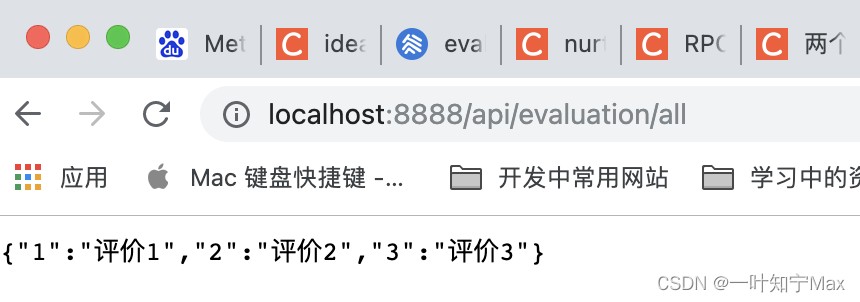
结果:
总结
以上为个人经验,希望能给大家一个参考,也希望大家多多支持代码网。






发表评论