
 我要评论
我要评论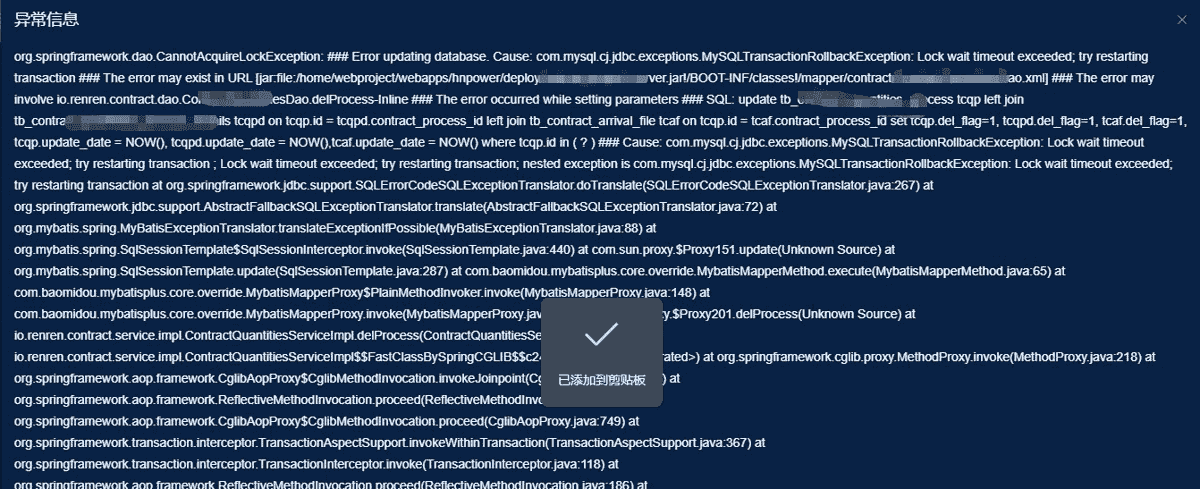
这是一个典型的 mysql 锁等待超时 错误。下面为您详细解释原因和解决方案。
核心原因
简单来说:有一个事务正在长时间锁定这条sql要操作的数据行,导致当前事务一直等待锁释放,最终超过了mysql的最大等待时间(innodb_lock_wait_timeout,默认50秒),从而失败回滚。
详细原因分析
- 锁竞争:sql语句是一个复杂的操作。
- 阻塞事务:在这个事务开始之前,很可能已经存在另一个未提交的事务(比如一个长时间的查询、更新或插入操作),这个“前辈”事务已经锁定了您sql语句中想要更新的部分或全部数据行。
- 等待与超时:这个事务(报错的事务)因为拿不到锁,只能进入等待队列。在mysql默认的50秒内,如果那个“阻塞事务”一直没有提交或回滚,您的这个事务就会因超时而失败,抛出
cannotacquirelockexception。
解决方案
1. 立即处理(治标)
重启事务:正如错误信息提示的
try restarting transaction,最简单的方法就是让您的应用程序自动或手动重试这个操作。确保重试逻辑有次数限制和延迟。找出并终止阻塞进程:
连接到您的mysql数据库。
执行以下sql,查看当前正在运行的事务和锁信息:
-- 查看当前所有事务(重点关注trx_state为'lock wait'和'running'的)
select * from information_schema.innodb_trx;

-- 或者更详细的锁信息查询
select
    r.trx_id waiting_trx_id,
    r.trx_mysql_thread_id waiting_thread,
    r.trx_query waiting_query,
    b.trx_id blocking_trx_id,
    b.trx_mysql_thread_id blocking_thread,
    b.trx_query blocking_query
from information_schema.innodb_lock_waits w
inner join information_schema.innodb_trx b on b.trx_id = w.blocking_trx_id
inner join information_schema.innodb_trx r on r.trx_id = w.requesting_trx_id;
从结果中找到
blocking_trx_id(阻塞者的事务id)或blocking_thread(阻塞者的连接id)。强制杀死阻塞的数据库连接(请谨慎操作,确认不影响业务):
kill [blocking_thread_id];
杀死后,您的等待事务应该就能继续执行了。
2. 长期优化(治本)
- 优化事务设计:
- 缩小事务范围:确保事务尽可能短小精悍。不要在事务中包含不必要的业务逻辑、远程调用或文件操作。执行完数据库操作后立即提交。
- 避免长事务:这是最根本的原因。检查代码中是否有事务方法执行时间过长。
- 优化sql和索引:
- 您的sql使用了
in (?)和多个join。确保tcqp.id、连接条件上的字段(如tcqpd.contract_process_id,tcaf.contract_process_id)都有合适的索引。没有索引会导致锁升级(例如锁表而不是锁行),大大增加锁冲突的概率。 - 使用
explain分析您的sql,看是否使用了正确的索引。
- 您的sql使用了
- 业务逻辑分离:
- 考虑将这个大而复杂的更新操作拆分成多个较小、较快的事务。例如,可以先更新主表,再更新子表。
- 调整数据库参数(需dba评估):
- innodb_lock_wait_timeout:可以适当调大这个参数(例如调到120秒),但这只是延长了等待时间,并未解决根本问题。
- innodb_rollback_on_timeout:默认是off,超时后只回滚最后一条语句。可以设置为on,让整个事务回滚,但这可能会影响业务逻辑。
- 使用不同的隔离级别:
- 默认的
repeatable read隔离级别更容易产生锁。如果业务允许,可以考虑在特定查询中使用read committed级别,但这需要仔细评估一致性要求。
- 默认的
总结
这个错误的根本原因是 数据库中存在“长事务”阻塞了您的正常操作。
建议处理流程:
- 紧急处理:通过
information_schema找到并kill阻塞进程。 - 分析原因:审查代码,找到是哪个业务操作导致了长事务。
- 根本解决:优化事务代码和sql,确保所有数据库操作快速完成并及时提交。
select * from information_schema.innodb_trx; 这个sql执行完的返回的数据怎么看?
执行 select * from information_schema.innodb_trx; 后,您会看到当前所有innodb事务的详细信息。以下是关键字段的解释和如何分析:
关键字段解释
| 字段 | 说明 | 重点关注 |
|---|---|---|
trx_id | innodb内部事务id | 用于识别特定事务 |
trx_state | 事务状态 | lock wait(锁等待中), running(运行中), rolling back(回滚中) |
trx_started | 事务开始时间 | 判断事务运行了多久 |
trx_requested_lock_id | 正在等待的锁id | 仅在trx_state='lock wait'时有值 |
trx_wait_started | 开始等待的时间 | 判断等待了多久 |
trx_weight | 事务权重 | 值越大越可能被回滚 |
trx_mysql_thread_id | mysql连接线程id | 用于kill命令 |
trx_query | 当前正在执行的sql | 查看事务在做什么 |
trx_operation_state | 当前操作状态 | |
trx_tables_in_use | 涉及的表数量 | |
trx_tables_locked | 被锁定的表数量 | |
trx_lock_structs | 锁结构数量 | |
trx_lock_memory_bytes | 锁内存占用 | |
trx_rows_locked | 被锁定的行数 | 值过大可能是问题 |
trx_rows_modified | 修改的行数 | 值过大可能是长事务 |
如何分析结果
1. 识别问题事务
-- 按事务开始时间排序,查看运行时间最长的事务
select
    trx_id,
    trx_state,
    trx_started,
    timediff(now(), trx_started) as running_time,
    trx_mysql_thread_id,
    trx_query,
    trx_rows_locked,
    trx_rows_modified
from information_schema.innodb_trx
order by trx_started asc;
2. 重点关注的情况
锁等待事务(trx_state = 'lock wait')
-- 查找正在等待锁的事务
select * from information_schema.innodb_trx
where trx_state = 'lock wait';
- 这类事务就是您的报错事务
- 查看
trx_query了解它在等待什么 - 记录
trx_mysql_thread_id以备需要时终止
长时间运行事务(running状态但运行时间很长)
-- 查找运行超过30秒的事务
select * from information_schema.innodb_trx
where trx_state = 'running'
  and trx_started < now() - interval 30 second;
3. 实际分析示例
假设查询结果如下:
| trx_id | trx_state | trx_started | trx_mysql_thread_id | trx_query | trx_rows_locked |
|---|---|---|---|---|---|
| 12345 | running | 2024-01-01 10:00:00 | 100 | update table set ... | 5000 |
| 67890 | lock wait | 2024-01-01 10:01:30 | 101 | update tb_contract_quantities_process ... | 0 |
分析结论:
- 线程id 100 的事务从 10:00 开始运行,已经锁定了5000行,很可能是阻塞事务
- 线程id 101 的事务在等待锁,这就是您的报错事务
4. 进一步定位阻塞关系
-- 更精确地查找谁阻塞了谁
select
    r.trx_id as waiting_trx_id,
    r.trx_mysql_thread_id as waiting_thread,
    r.trx_query as waiting_query,
    b.trx_id as blocking_trx_id,
    b.trx_mysql_thread_id as blocking_thread,
    b.trx_query as blocking_query
from information_schema.innodb_lock_waits w
inner join information_schema.innodb_trx b on b.trx_id = w.blocking_trx_id
inner join information_schema.innodb_trx r on r.trx_id = w.requesting_trx_id;
5. 处理建议
如果是测试环境:直接终止阻塞事务
kill 100; -- 终止线程id为100的连接
如果是生产环境:
- 联系相关业务负责人确认该长时间运行的事务是否可以终止
- 分析
trx_query中的sql,优化其性能 - 考虑在业务低峰期执行相关操作
通过这种方法,您就能准确识别出导致锁等待超时的根本原因了。
阻塞事务 可能产生的原因
阻塞事务的产生原因多种多样,以下是主要的分类和具体原因:
1. 事务设计问题
长事务
-- 典型的长事务模式
begin;
-- 执行复杂的业务逻辑
update large_table set ... where ...; -- 耗时操作
-- 中间可能包含业务逻辑、外部api调用等
commit; -- 很久之后才提交
特征:事务开始和提交时间间隔很长
未提交的事务
// 代码中忘记提交或回滚
@transactional
public void processdata() {
    // 执行更新操作
    updatetablea(...);
    // 如果这里发生异常,事务可能一直挂起
    if (somecondition) {
        return; // 忘记提交或回滚
    }
    // ... 其他操作
}
2. sql性能问题
缺乏合适的索引
-- 没有索引的更新操作
update tb_contract_quantities_process
set del_flag = 1
where contract_name like '%某合同%';  -- 全表扫描,锁住大量行

-- 有索引的高效更新
update tb_contract_quantities_process
set del_flag = 1
where id in (1, 2, 3);  -- 使用主键索引,只锁特定行
全表扫描操作
-- 导致锁表的操作
update table_a set status = 1 where unindexed_column = 'value';
delete from large_table where create_time < '2023-01-01';
3. 锁机制相关
锁升级
- 行锁升级为表锁:当一条sql需要锁定大量数据行时,innodb可能将锁升级为表锁
- 间隙锁(gap lock):在repeatable read隔离级别下,范围查询会锁定不存在的记录区间
死锁循环
-- 事务a
update accounts set balance = balance - 100 where id = 1;
update accounts set balance = balance + 100 where id = 2;

-- 事务b (同时执行)
update accounts set balance = balance - 50 where id = 2;
update accounts set balance = balance + 50 where id = 1;
4. 应用架构问题
同步批量操作
// 在事务中处理大量数据
@transactional
public void batchprocesscontracts(list<long> contractids) {
    for (long id : contractids) {  // 循环处理,事务时间很长
        updatecontractstatus(id);
        insertprocesslog(id);
        // ... 其他操作
    }
}
嵌套事务问题
@transactional
public void mainprocess() {
    // 主事务开始
    updatemaintable();

    // 调用另一个事务方法
    subprocess();  // 如果subprocess有@transactional(propagation=requires_new)

    // 主事务继续...
}
5. 业务逻辑缺陷
用户交互式事务
@transactional
public void approvecontract(long contractid) {
    // 开始事务
    updatecontractstatus(contractid, "approving");
    // 等待用户确认(事务一直打开!)
    waitforuserconfirmation();  // 错误做法!
    updatecontractstatus(contractid, "approved");
}
循环依赖更新
-- 事务a
update table_a set status = (select count from table_b where ...);
-- 事务b
update table_b set count = (select status from table_a where ...);
6. 数据库配置问题
不合理的隔离级别
- read uncommitted:脏读风险
- repeatable read:容易产生间隙锁(mysql默认)
- serializable:严格的锁机制,性能差
连接池配置不当
# 连接池配置问题
spring.datasource.hikari.maximum-pool-size=200  # 连接数过多,竞争激烈
spring.datasource.hikari.connection-timeout=30000  # 连接超时时间过长
7. 监控和诊断方法
识别阻塞事务的sql
-- 查看当前执行的所有sql
show processlist;

-- 查看详细的锁信息
select
    r.trx_id waiting_trx_id,
    r.trx_query waiting_query,
    b.trx_id blocking_trx_id,
    b.trx_query blocking_query,
    b.trx_started blocking_started,
    timediff(now(), b.trx_started) blocking_duration
from information_schema.innodb_lock_waits w
inner join information_schema.innodb_trx b on b.trx_id = w.blocking_trx_id
inner join information_schema.innodb_trx r on r.trx_id = w.requesting_trx_id;
8. 预防和解决方案
优化事务设计
// 正确的做法:短事务
public void processinshorttransactions(list<long> ids) {
    for (long id : ids) {
        transactiontemplate.execute(status -> {
            // 每个id在独立事务中处理
            updatecontract(id);
            insertlog(id);
            return null;
        });
    }
}
添加合适的索引
-- 为查询和更新条件添加索引
create index idx_contract_process on tb_contract_quantities_process(id);
create index idx_process_details on tb_contract_quantities_process_details(contract_process_id);
create index idx_arrival_file on tb_contract_arrival_file(contract_process_id);
使用乐观锁
// 使用版本号避免悲观锁
@transactional
public boolean updatewithoptimisticlock(long id, string newvalue) {
    entity entity = entitydao.findbyid(id);
    int version = entity.getversion();

    int affected = entitydao.updatewithversion(id, newvalue, version, version + 1);
    return affected > 0;  // 如果失败可以重试
}
通过分析这些可能的原因,您可以系统地排查和解决阻塞事务问题。
总结
到此这篇关于mysql锁等待超时错误详细解释原因和解决方案的文章就介绍到这了,更多相关mysql锁等待超时错误内容请搜索代码网以前的文章或继续浏览下面的相关文章希望大家以后多多支持代码网!




发表评论