
 我要评论
我要评论双向链表的结构
有了之前不带头单链表的基础,现在再来看看双向链表,全称带头双向循环链表
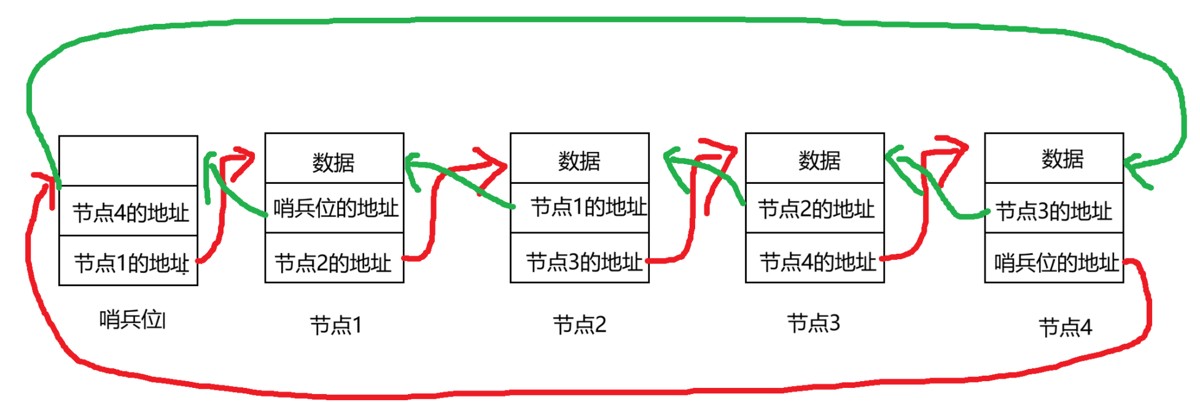
这里的带头并不是指的之前单链表中的头节点,实际称为哨兵位。哨兵位节点不存储任何有效数据,只是用于避免遍历链表时进入死循环。
带头双向循环链表的实现
本文手写的带头双向循环链表存储的数据类型为 int
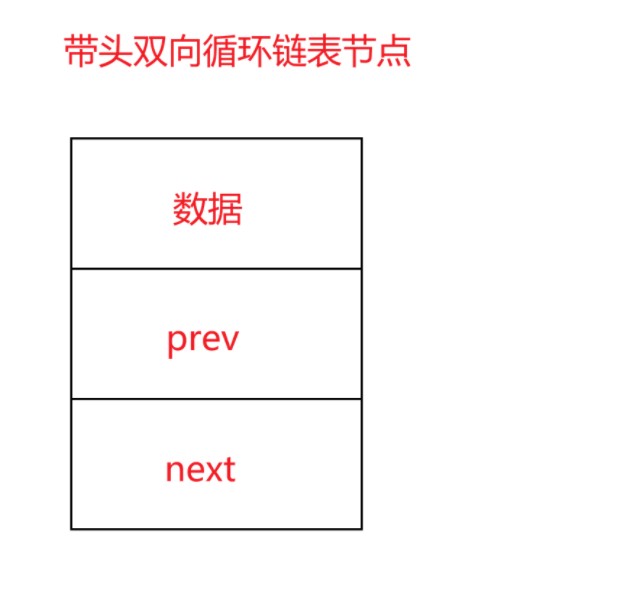
带头双向循环链表的结构
// 重命名方便书写和修改
typedef int ldatatype;
typedef struct listnode
{
	ldatatype data;
	struct listnode* prev;
	struct listnode* next;
}listnode;
prev 指向的是前一个节点的, next 指向的是后一个节点, data 用于存放数据
带头双向循环链表的方法
头文件包含
#include <stdio.h> //标准输入输出
#include <stdlib.h> // 主要使用动态开辟内存
#include <assert.h> // 主要使用断言
带头双向循环链表节点的申请
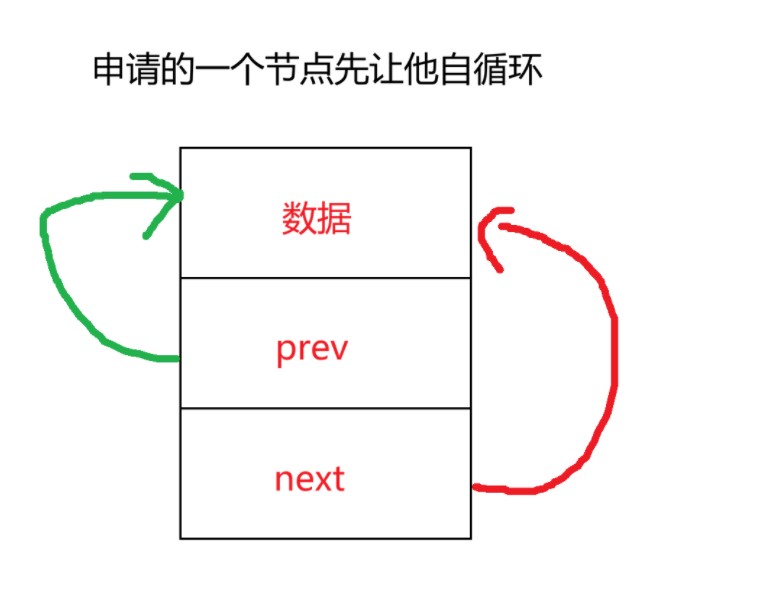
申请的一个节点要让他自循环
listnode* buynode(ldatatype data)
{
	// 动态申请空间
	listnode* node = (listnode*)malloc(sizeof(listnode));
	if (!node)
	{
		// 没有开辟成功
		perror("malloc error");
		exit(1);
	}
	node->data = data;
	// 要让这个节点自循环
	node->prev = node;
	node->next = node;
	return node;
}
动态申请的内存空间存放于堆区,不主动释放出函数后不会被系统收回
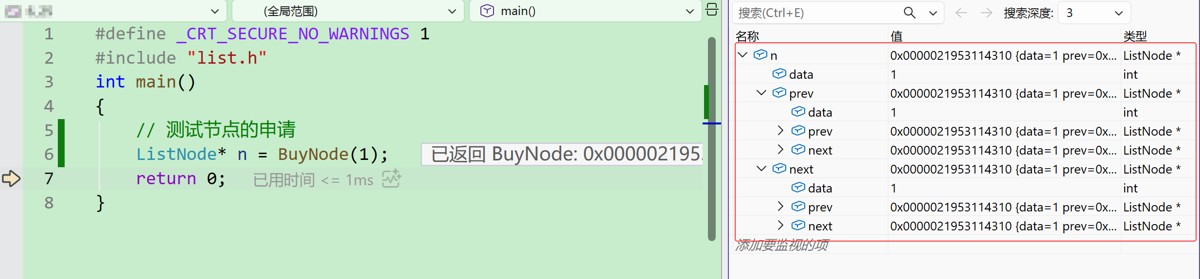
测试
int main()
{
	// 测试节点的申请
	listnode* n = buynode(1);
	return 0;
}
带头双向循环链表的插入
带头双向循环链表数据的打印
打印整个链表数据就涉及到遍历链表,需要找到尾节点,尾节点的下一个节点是哨兵位
void print_list(listnode* phead)
{
	// 打印链表
	// 判空,传进来的 phead 不能为 null
	assert(phead);
	if (phead->next == phead)
	{
		// 处理只有一个哨兵位的情况
		printf("null\n");
		return;
	}
	listnode* pcur = phead-> next; // 用 pcur 去进行遍历
	while (pcur != phead)
	{
		// 当 pcur 走到 phead 的位置时说明整个链表都已经走完了
		printf("%d->", pcur->data);
		pcur = pcur->next;
	}
	printf("\n");
}
void reverse_print_list(listnode* phead)
{
	// 逆序打印链表
	// 判空,传进来的 phead 不能为 null
	assert(phead);
	if (phead->prev == phead)
	{
		// 处理只有一个哨兵位的情况
		printf("null\n");
		return;
	}
	listnode* pcur = phead->prev; // 用 pcur 去进行遍历
	while (pcur != phead)
	{
		// 当 pcur 走到 phead 的位置时说明整个链表都已经走完了
		printf("%d->", pcur->data);
		pcur = pcur->prev;
	}
	printf("\n");
}
头插
让新节点的 next 指向原头节点(哨兵位的 next 指向的节点), prev 指向哨兵位。原头节点(哨兵位的 next 指向的节点)的 prev 指向新节点,哨兵位的 next 指向这个新节点。
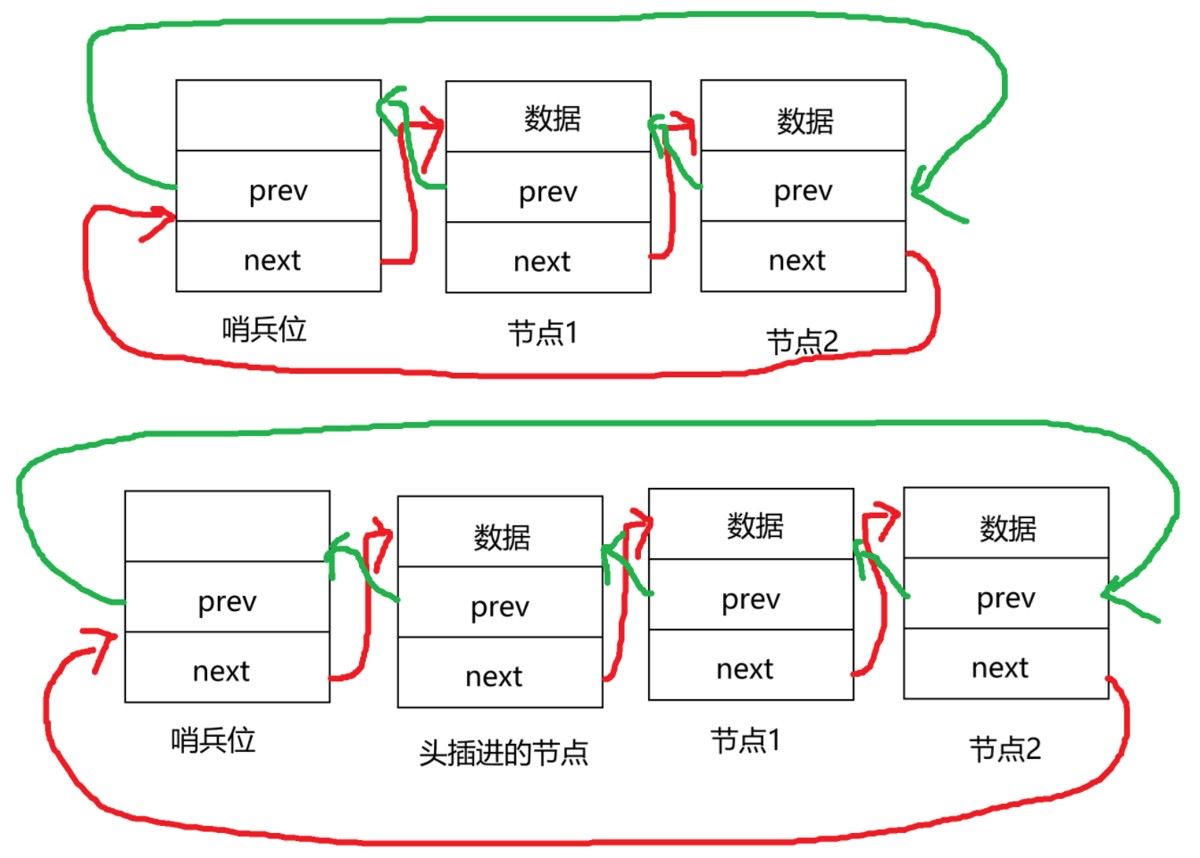
void pushfront(listnode* phead, ldatatype data)
{
	// 双向链表的头插
	// 因为哨兵位不用存放有效数据,且哨兵位本身不能被修改,所以用传值调用即可
	// 判空,传进来的 phead 不能为 null
	assert(phead);
	// 调用申请节点函数
	listnode* newnode = buynode(data);
	// 让新节点的 next 指向原头节点(哨兵位的 next 指向的节点)
	newnode->next = phead->next;
	// 让新节点的 prev 指向哨兵位
	newnode->prev = phead;
	//原头节点(哨兵位的 next 指向的节点)的 prev 指向新节点
	phead->next->prev = newnode;
	// 哨兵位的 next 指向这个新节点
	phead->next = newnode;
}
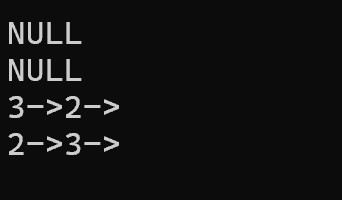
测试
int main()
{
	// 测试头插和打印
	listnode* head = buynode(-1);// 申请哨兵位
	print_list(head);
	reverse_print_list(head);
	pushfront(head, 2);
	pushfront(head, 3);
	print_list(head);
	reverse_print_list(head);
	return 0;
}
尾插
让新节点的 prev 指向原尾节点,next 指向哨兵位,原尾节点的 next 指向新节点,哨兵位的 prev 指向新节点。
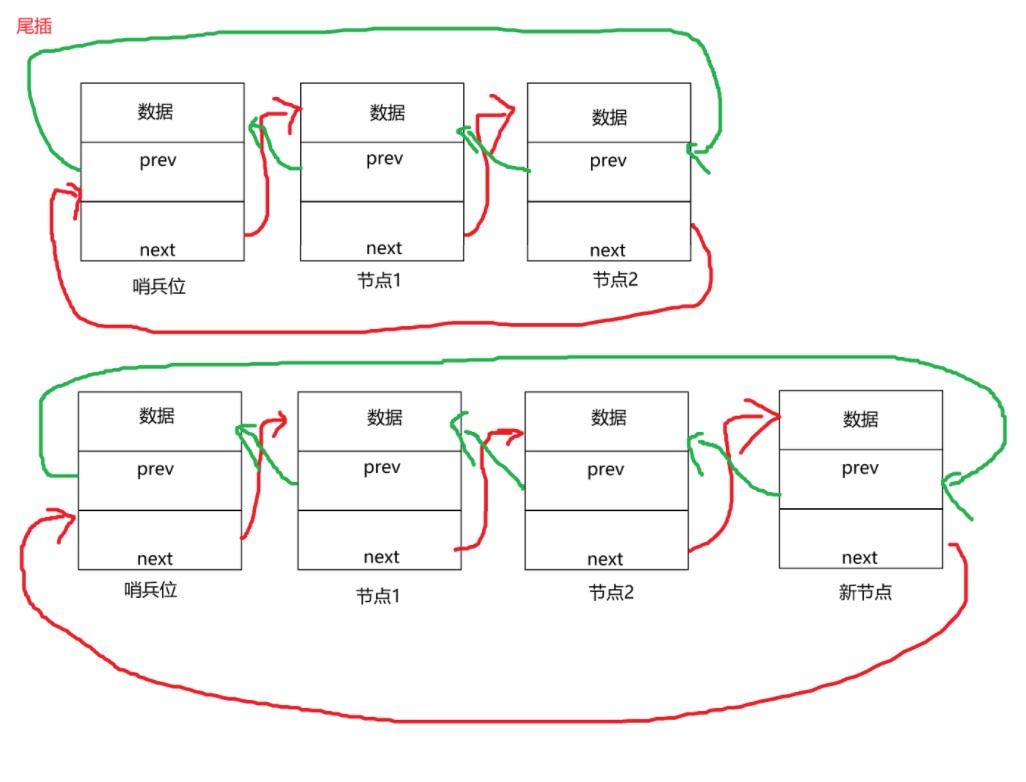
void pushback(listnode* phead, ldatatype data)
{
	// 尾插
	// 因为哨兵位不用存放有效数据,且哨兵位本身不能被修改,所以用传值调用即可
	// 判空,传进来的 phead 不能为 null
	assert(phead);
	// 调用申请节点函数
	listnode* newnode = buynode(data);
	// 让新节点的 prev 指向原尾节点
	newnode->prev = phead->prev;
	// 让新节点的 next 指向哨兵位
	newnode->next = phead;
	// 原尾节点的 next 指向新节点
	phead->prev->next = newnode;
	// 哨兵位的 prev 指向新节点
	phead->prev = newnode;
}
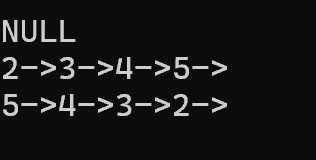
测试
int main()
{
	// 测试尾插
	listnode* head = buynode(-1); // 申请哨兵位
	print_list(head);
	pushback(head, 2);
	pushback(head, 3);
	pushback(head, 4);
	pushback(head, 5);
	print_list(head);
	reverse_print_list(head);
	return 0;
}
带头双向循环链表的查找
遍历链表查找节点,找到了返回,找不到返回 null
listnode* find(listnode* phead, ldatatype data)
{
	// 双向链表的查找
	// 传进来的 phead 不能是 null
	assert(phead);
	if (phead->prev == phead)
	{
		// 处理只有一个哨兵位的情况,这是个空链表
		printf("当前链表为空!\n");
		return null;
	}
	listnode* pcur = phead->next;// 用 pcur 去遍历
	while (pcur != phead)
	{
		if (pcur->data == data)
		{
			// 找到了就返回
			return pcur;
		}
		pcur = pcur->next;
	}
	// 出来说明遍历完了链表都没找到
	return null;
}
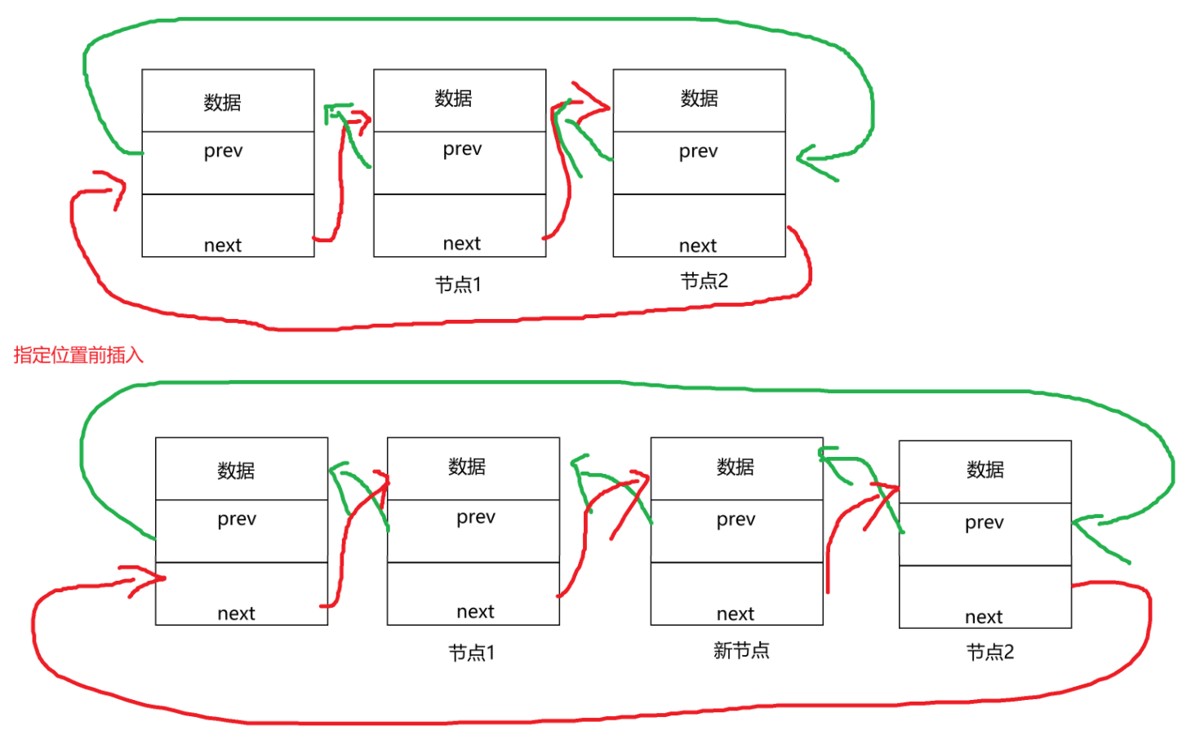
指定位置前插入
让新节点的 prev 指向原节点的 prev 指向的节点,next 指向原节点,原节点的 prev 指向新节点,原节点的 next 指向的节点指向新节点。
void push_pos_before(listnode* pos, ldatatype data)
{
	// 指定为之前插入
	// 判空,传进来的 pos 不能为 null
	assert(pos);
	listnode* prev = pos->prev; // 用 prev 来记住 pos 前的节点
	// 调用申请节点函数
	listnode* newnode = buynode(data);
	//让新节点的 prev 指向原节点的 prev 指向的节点
	newnode->prev = prev;
	// 让新节点的 next 指向原节点
	newnode->next = pos;
	// 原节点的 prev 指向新节点
	pos->prev = newnode;
	// 原节点的 next 指向的节点指向新节点
	prev->next = newnode;
}
测试
int main()
{
	// 测试指定位置插入
	listnode* head = buynode(-1); // 申请哨兵位
	print_list(head);
	push_pos_before(head, 1);
	push_pos_before(head, 2);
	push_pos_before(head, 3);
	print_list(head);
	reverse_print_list(head);
	listnode* find = find(head, 2);
	push_pos_before(find, 4);
	print_list(head);
	reverse_print_list(head);
	return 0;
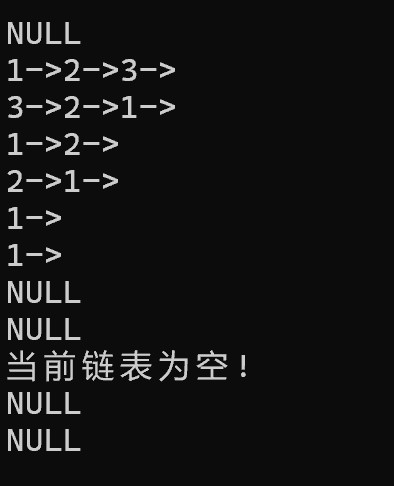
}
带头双向循环链表的删除
节点都是动态申请的空间,删除需要用到 free
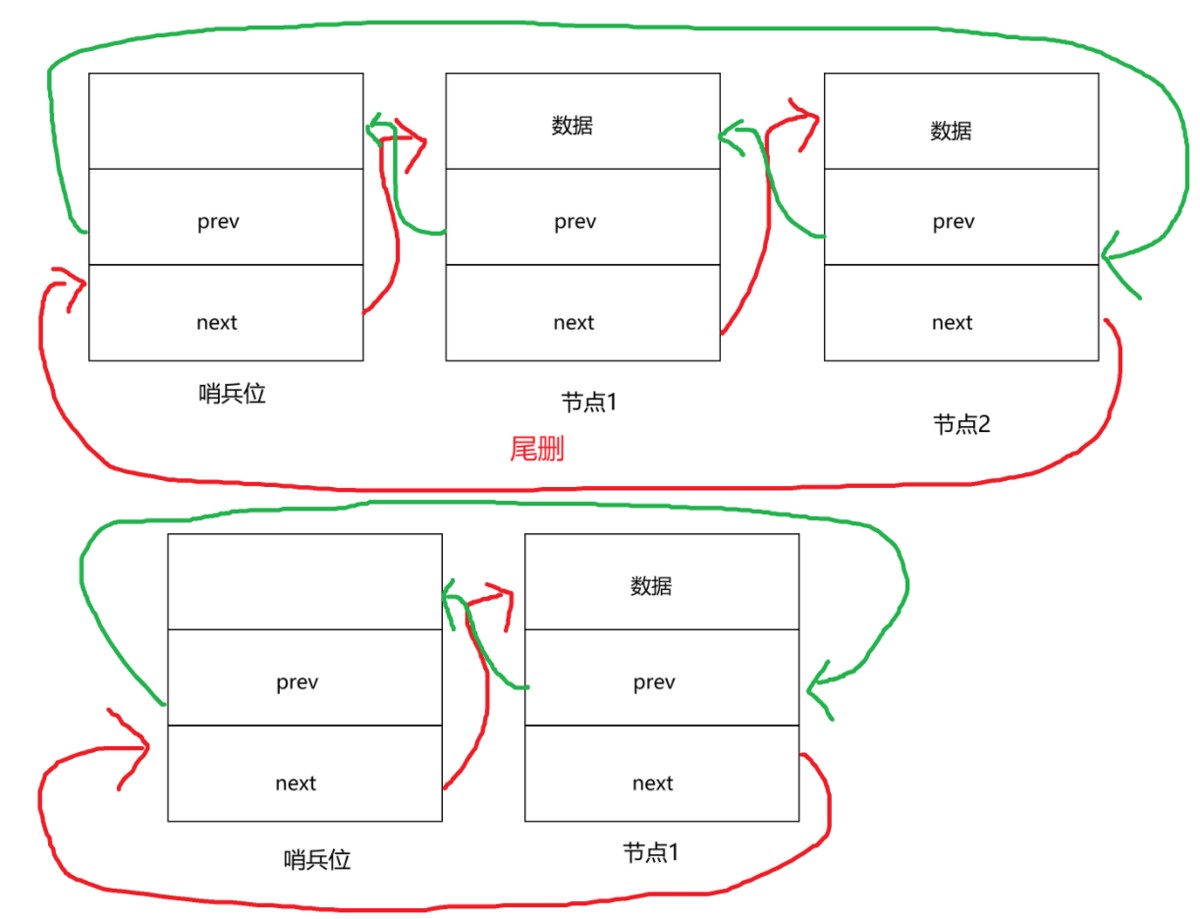
尾删
让尾节点的 prev 指向的节点的 next 指向头节点,头节点的 prev 指向新的尾节点,再释放尾节点
void popback(listnode* phead)
{
	// 双向链表尾删
	// 判空,传进来的 phead 不能为 null
	assert(phead);
	if (phead->next == phead)
	{
		// 只有一个哨兵位,说明链表是空的
		printf("当前链表为空!\n");
		return;
	}
	listnode* pcur = phead; // 让 pcur 去遍历链表
	listnode* prev = pcur->prev; // 用 ptail 去记录 pcur->next 指向的节点
	while (pcur->next != phead)
	{
		// pcur->next 为 phead 时说明 pcur 已经到尾节点了
		pcur = pcur->next;
		prev = pcur->prev;
	}
	// 让尾节点的 prev 指向的节点的 next 指向头节点
	prev->next = phead;
	// 让头节点的 prev 指向新的尾节点
	phead->prev = prev;
	// 释放原尾节点
	free(pcur);
}
测试
int main()
{
	// 测试尾删
	listnode* head = buynode(-1); // 申请哨兵位
	print_list(head);
	push_pos_before(head, 1);
	push_pos_before(head, 2);
	push_pos_before(head, 3);
	print_list(head);
	reverse_print_list(head);
	popback(head);
	print_list(head);
	reverse_print_list(head);
	popback(head);
	print_list(head);
	reverse_print_list(head);
	popback(head);
	print_list(head);
	reverse_print_list(head);
	popback(head);
	print_list(head);
	reverse_print_list(head);
	return 0;
}
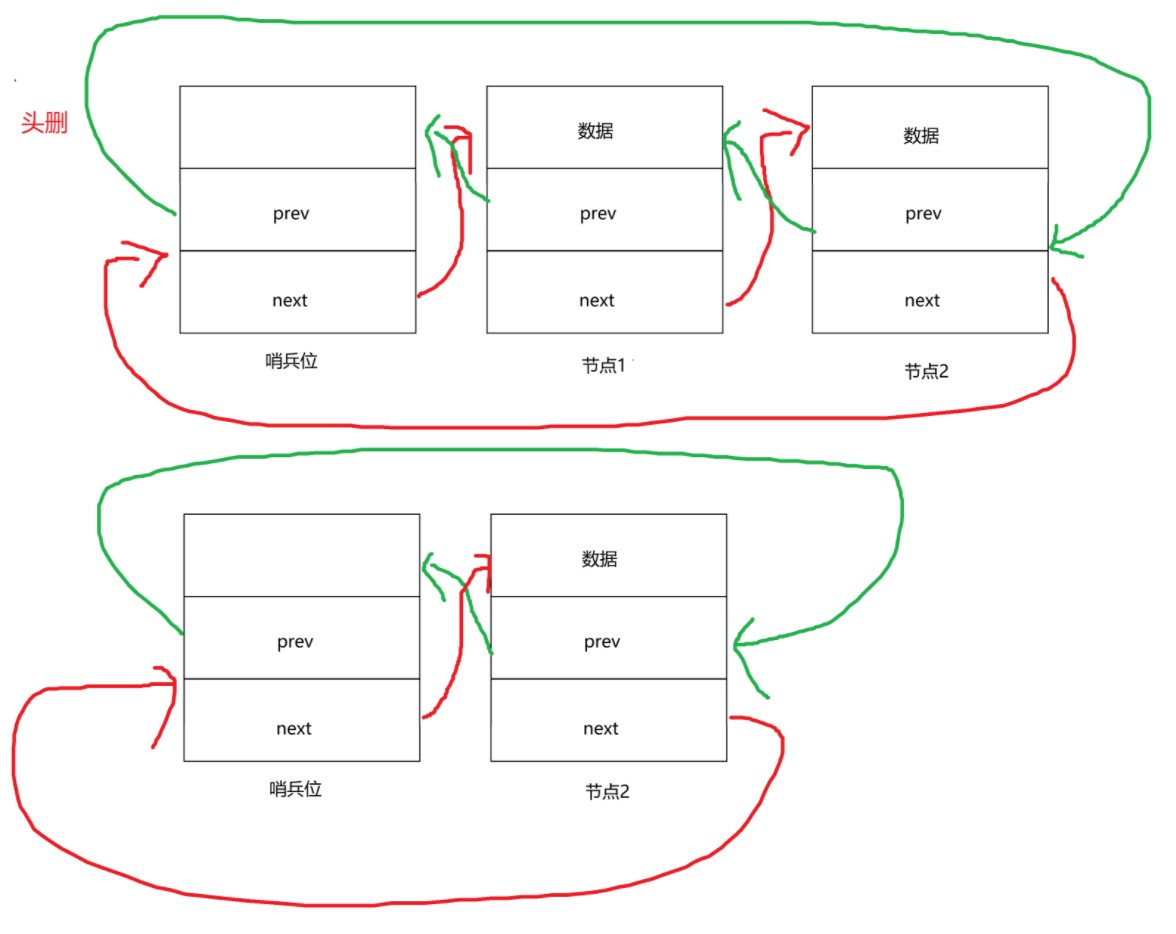
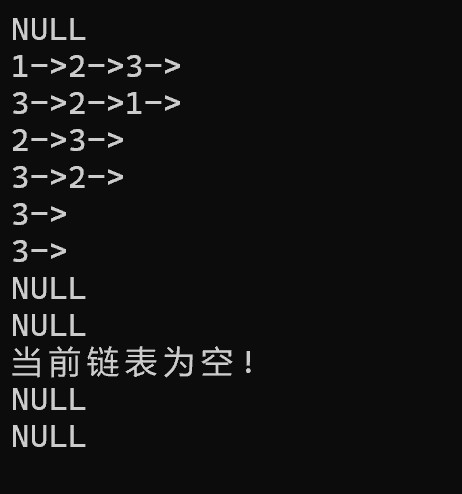
头删
哨兵位的 next 指向要删除节点的 next 指向的节点,要删除节点的 next 指向的节点的 prev 指向哨兵位,最后释放要删除的节点。
void popfront(listnode* phead)
{
	// 头删
	// 判空,传进来的 phead 不能为 null
	assert(phead);
	if (phead->next == phead)
	{
		// 只有一个哨兵位,说明链表是空的
		printf("当前链表为空!\n");
		return;
	}
	// 记录要删除的节点
	listnode* del = phead->next;
	// 哨兵位的 next 指向要删除节点的 next 指向的节点
	phead->next = del->next;
	// 要删除节点的 next 指向的节点的 prev 指向哨兵位
	del->next->prev = phead;
	// 释放要删除的节点
	free(del);
}
测试
int main()
{
	// 测试头删
	listnode* head = buynode(-1); // 申请哨兵位
	print_list(head);
	push_pos_before(head, 1);
	push_pos_before(head, 2);
	push_pos_before(head, 3);
	print_list(head);
	reverse_print_list(head);
	popfront(head);
	print_list(head);
	reverse_print_list(head);
	popfront(head);
	print_list(head);
	reverse_print_list(head);
	popfront(head);
	print_list(head);
	reverse_print_list(head);
	popfront(head);
	print_list(head);
	reverse_print_list(head);
	return 0;
}
指定位置删除
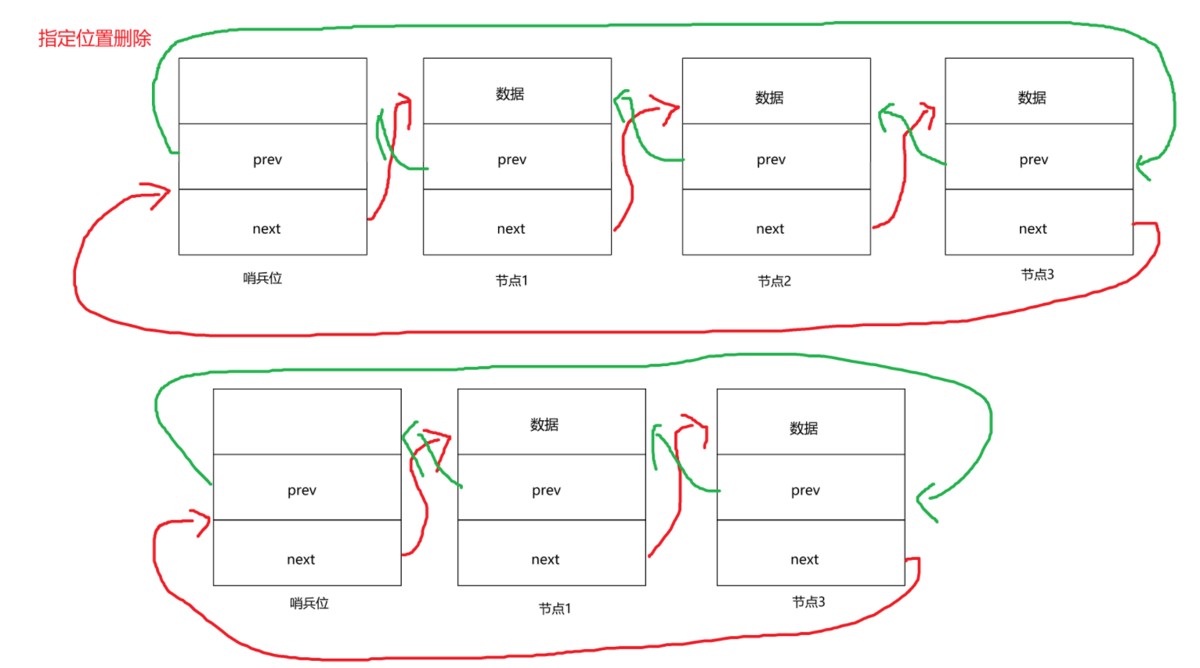
void pop_pos_del(listnode* phead, listnode* pos)
{
	// 指定位置删除
	// 判空,传进来的 pos 和 phead 不能为空
	assert(phead && pos);
	if (pos == phead)
	{
		printf("哨兵位不能删除!\n");
		return;
	}
	listnode* prev = pos->prev;
	listnode* next = pos->next;
	// 让 pos 前的节点的 next 指向 pos 后的节点
	prev->next = next;
	// 让 pos 后的节点的 prev 指向 pos 前的节点
	next->prev = prev;
	// 释放节点
	free(pos);
}
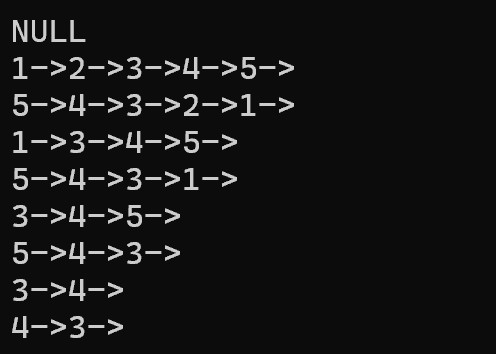
测试
int main()
{
	listnode* head = buynode(-1); // 申请哨兵位
	print_list(head);
	push_pos_before(head, 1);
	push_pos_before(head, 2);
	push_pos_before(head, 3);
	push_pos_before(head, 4);
	push_pos_before(head, 5);
	print_list(head);
	reverse_print_list(head);
	listnode* find1 = find(head, 1);
	listnode* find2 = find(head, 2);
	listnode* find3 = find(head, 5);
	//测试删中间
	pop_pos_del(head, find2);
	print_list(head);
	reverse_print_list(head);
	//测试删头
	pop_pos_del(head, find1);
	print_list(head);
	reverse_print_list(head);
	//测试删尾
	pop_pos_del(head, find3);
	print_list(head);
	reverse_print_list(head);
	return 0;
}
带头双向循环链表值的修改
void pos_edit(listnode* phead, listnode* pos, ldatatype data)
{
	// 链表值的修改
	// 判空,传进来的 phead 和 pos 不允许修改
	assert(phead && pos);
	if (phead == pos)
	{
		printf("哨兵位不允许修改!\n");
		return;
	}
	// 修改
	pos->data = data;
}
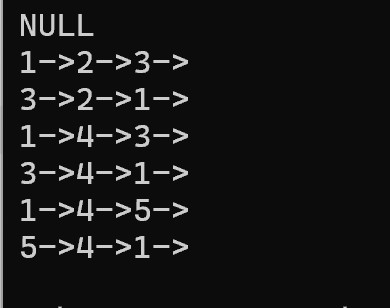
测试
int main()
{
	// 测试修改
	listnode* head = buynode(-1); // 申请哨兵位
	print_list(head);
	push_pos_before(head, 1);
	push_pos_before(head, 2);
	push_pos_before(head, 3);
	print_list(head);
	reverse_print_list(head);
	listnode* find = find(head, 2);
	pos_edit(head, find, 4);
	print_list(head);
	reverse_print_list(head);
	find = find(head, 3);
	pos_edit(head, find, 5);
	print_list(head);
	reverse_print_list(head);
	return 0;
}
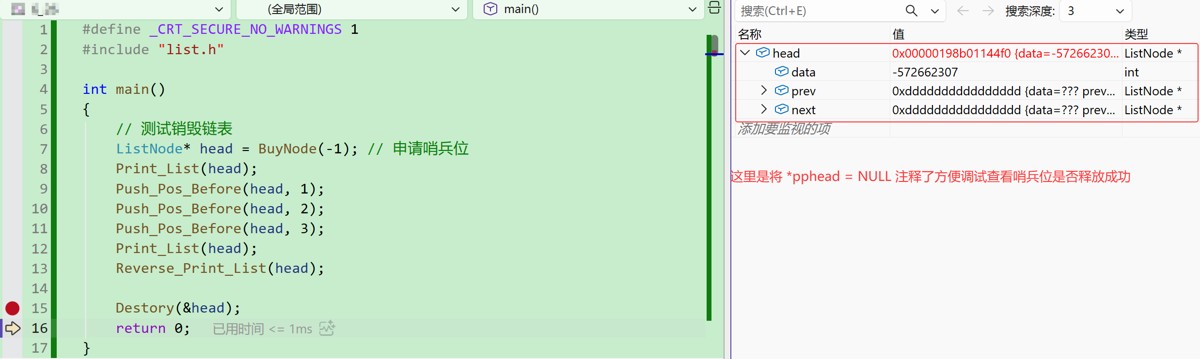
带头双向循环链表的销毁
从头节点开始释放,最后释放尾节点
void destory(listnode** pphead)
{
	// 链表的销毁
	// 判空,传进来的 phead 不能为 null
	// 因为这里会销毁哨兵位所以传二级指针
	assert(pphead && *pphead);
	listnode* pcur = (*pphead)->next;// 用 pcur 来遍历,从头节点开始释放
	listnode* ptail = pcur->next; // 用 ptail 来记录 pcur 的下一个节点
	while (pcur != *pphead)
	{
		// 释放当前节点
		free(pcur);
		// 走向下一个节点
		// 当 pcur 走到哨兵位的时候, 哨兵位还没有被释放
		// 所以 ptail 还可以向前走
		pcur = ptail;
		ptail = ptail->next;
	}
	//最后释放哨兵位
	free(*pphead);
	*pphead = null;
}
测试
int main()
{
	// 测试销毁链表
	listnode* head = buynode(-1); // 申请哨兵位
	print_list(head);
	push_pos_before(head, 1);
	push_pos_before(head, 2);
	push_pos_before(head, 3);
	print_list(head);
	reverse_print_list(head);

	destory(&head);
	return 0;
}
到此这篇关于c语言实现带头双向循环链表的文章就介绍到这了,更多相关c语言带头双向循环链表内容请搜索代码网以前的文章或继续浏览下面的相关文章希望大家以后多多支持代码网!





发表评论