
 我要评论
我要评论一、线程池概述
1.1 线程池概念
线程池技术通过在系统中预先创建一定数量的线程,当任务请求到来时从线程池中分配一个预先创建的线程去处理,线程在处理完任务之后并不会销毁,而是把线程还到线程池中,继续为后续的任务提供服务。
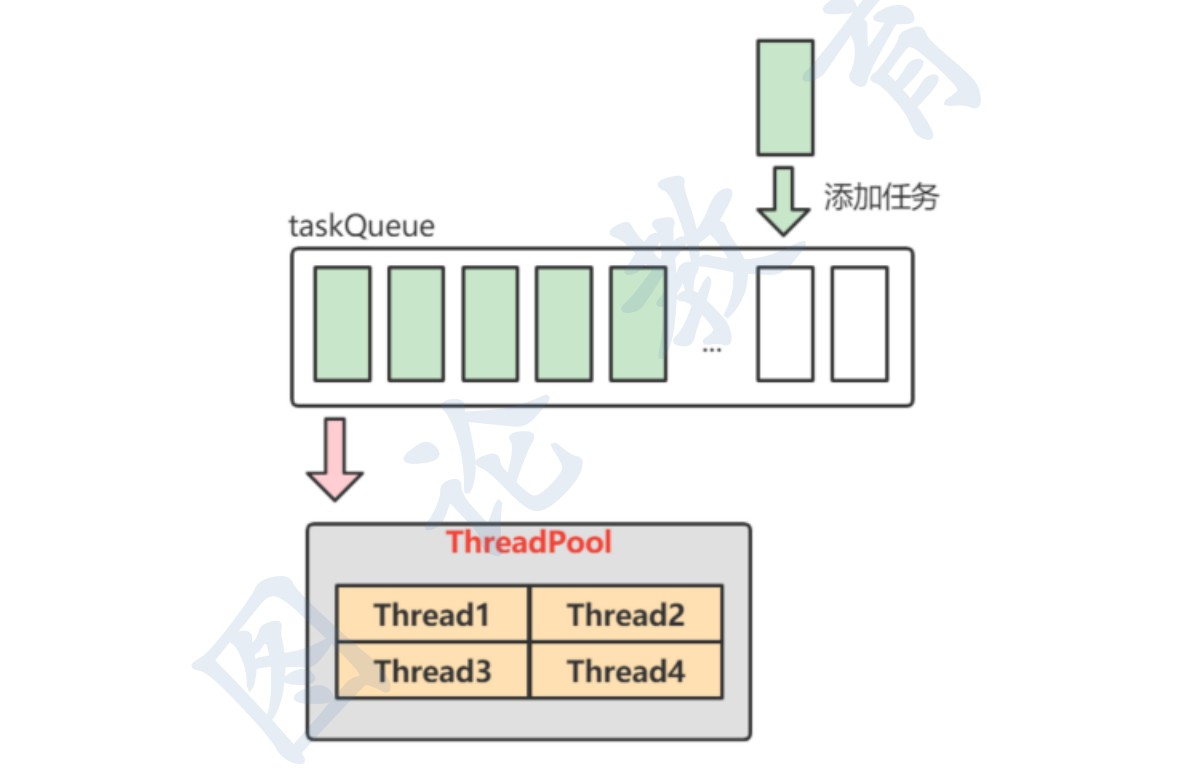
线程池的特点:
线程复用:线程池会在内部维护一定数量的线程,并在需要时重复使用这些线程来执行任务,避免频繁地创建和销毁线程,从而提高性能和效率。
控制并发性:对于多核处理器,由于多线程被分配到多个处理器中,提高并行处理效率。
任务队列:当线程池中的线程已经全部被占用时,新提交的任务会被放入一个任务队列中进行排队等待执行,排队机制可以根据具体线程池实现,选择不同的队列类型,如有界队列或无界队列。
开发环境:
window: vs2019
linux: g++ 要求g++版本能够支持c++11以上
1.2 按应用场景分类
1. fixedthreadpool
固定线程池:线程池中的线程数量固定,这些线程一直存在,不会随任务的增加或减少而动态调整,超出的任务会在队列中等待。
使用场景:任务量比较固定但耗时较长的任务。
2. cachedthreadpool
缓存线程池:可根据需要创建新线程的线程池,如果新任务到达,但线程池中没有可用线程,则创建一个新线程并添加到池中,如果有被使用完但是还没有销毁的线程,就复用该线程。
使用场景:任务量大但耗时少的任务。
3. singlethreadpool
单线程池:使用唯一的工作线程来执行任务,保证所有任务按照指定顺序(fifo,lifo,优先级)执行。
使用场景:多个任务顺序执行(fifo,优先级)。
4. workstealingpool
工作窃取线程池:创建一个拥有多个任务队列(以便减少连接数)的线程池。
使用场景:高并发下的负载均衡。
5. scheduledthreadpool
计划线程池(定时线程池,调度线程池)
使用场景:定时以及周期性执行任务。
1.3 线程池模式
线程池模式一般分为两种:l/f领导者与跟随者模式,hs/ha半同步/半异步模式。
1.4 半同步/半异步模式分析
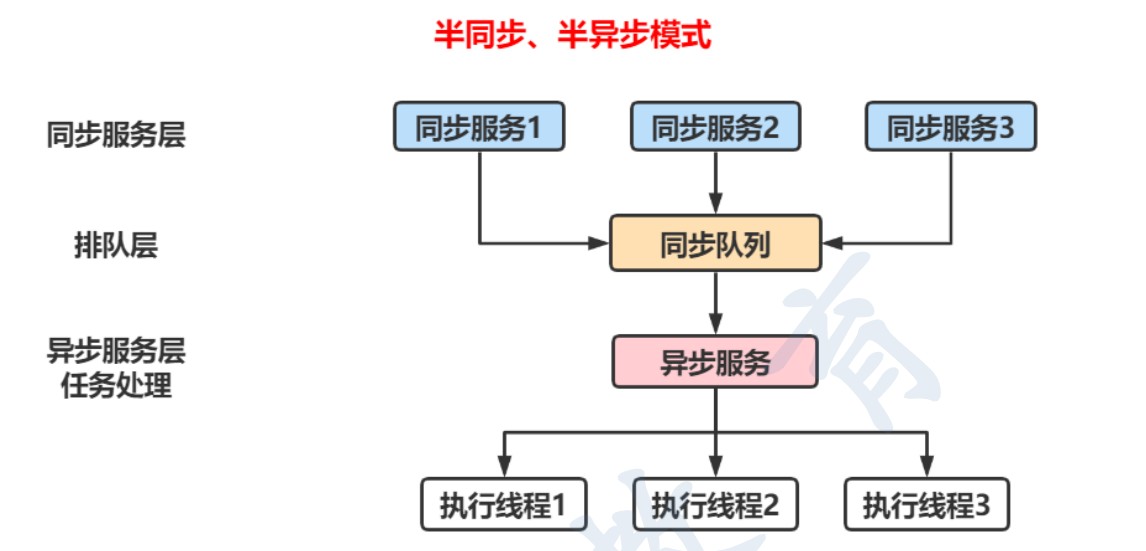
1. 同步服务层,它处理来自上层的任务请求,上层的请求可能是并发的,这些请求不是马上就会被处理,而是将这些任务放到一个同步队列中,等待处理。
2. 同步排队层,来自上层的任务请求都会加到排队层中等待处理。
3. 异步服务层:这一层会有多个线程同时处理排队层中的任务,异步服务层从同步排队层中取出任务并行的处理。
1.5 线程池实现的关键技术分析
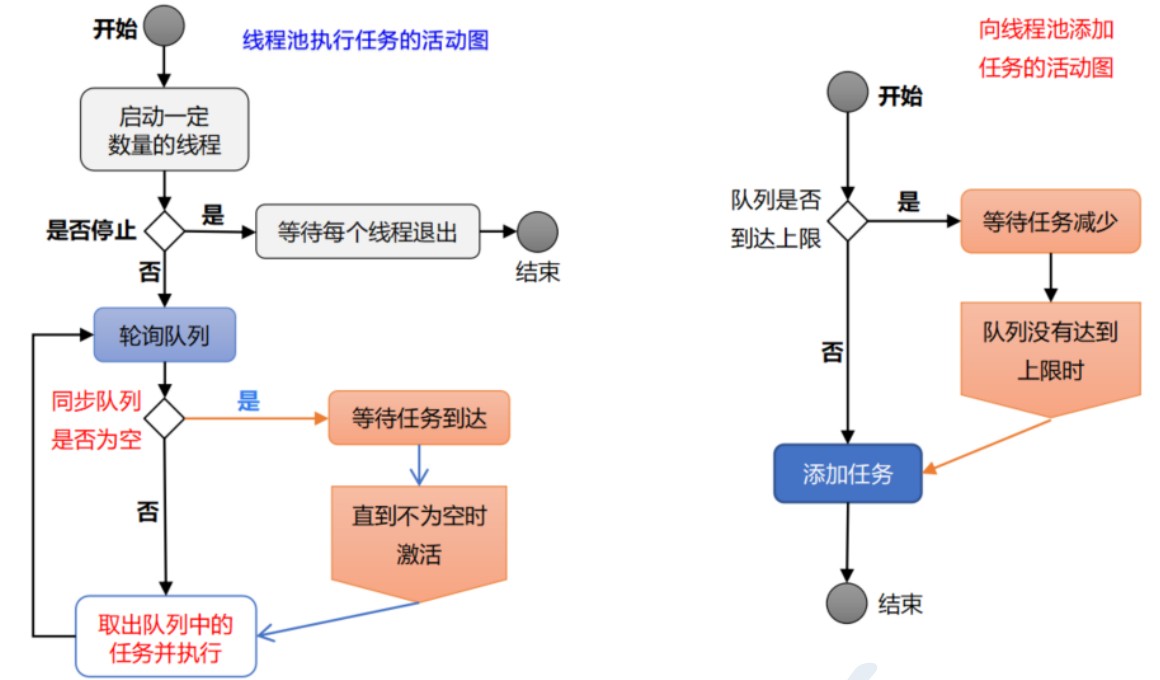
线程池有两个活动过程,一个是往同步队列中添加任务的过程,另一个是从同步队列中取任务的过程。
半同步半异步线程池活动图
二、cachedthreadpool的实现
2.1 需求
动态调整线程数量:cachedthreadpool的线程数量是动态调整的。当有新任务提交时,如果线程池中有空闲的线程,则会立即使用空闲线程执行任务;如果线程池中没有空闲线程,则会创建一个新的线程来执行任务。当线程空闲一段时间后,超过一定的时间,会被回收销毁。
2.2 syncqueue同步队列的设计和实现
双条件变量分离生产 / 消费唤醒;m_needstop停机标志实现安全退出;stop 接口先等待队列清空再广播通知,保证任务不丢失;同时提供单条 take 与批量 take 两种消费模式。
#ifndef syncqueue_hpp
#define syncqueue_hpp
#include<list>
#include<mutex>
#include<condition_variable>
#include<iostream>
using namespace::std;
template<class t>
class synqueue
{
private:
    std::list<t> m_queue;                     // 任务存储容器
    mutable std::mutex m_mutex;               // 全局互斥锁,保护队列所有读写
    std::condition_variable m_notempty;       // 条件变量:队列非空,唤醒消费者
    std::condition_variable m_notfull;        // 条件变量:队列未满,唤醒生产者
    size_t m_waittime;                        // 阻塞等待超时时间(秒)
    int m_maxsize;                            // 有界队列最大容量
    bool m_needstop;                          // 队列停止标记,用于优雅退出
    // 判断队列是否已满
    bool isfull()const;
    // 判断队列是否为空
    bool isempty()const;
    // 底层入队通用模板,完美转发统一处理左值、右值
    template<class f>
    int add(f&& x);
public:
    // 构造:指定队列上限、等待超时时间
    synqueue(int maxsize = 100, int waittime = 1);
    // 左值版本入队
    int put(const t& x);
    // 右值版本入队
    int put(t&& x);
    // 阻塞等待任务,仅做等待探测,不取出数据
    int nottask();
    // 批量取出全部任务,移动语义转移list
    void take(std::list<t>& list);
    // 阻塞获取单个任务,支持超时
    int take(t& t);
    // 优雅停止队列:等待任务消费完毕,唤醒所有阻塞线程
    void stop();
    // 查询队列是否为空
    bool empty()const;
    // 查询队列是否已满
    bool full()const;
    // 获取当前任务数量
    size_t size()const;
};
#endif // !syncqueue_hpp
add函数
上锁后使用带超时的wait_for等待队列腾出空间,谓词同时判断停止标记与队列是否未满,规避虚假唤醒。等待超时直接返回失败;若触发停止标志则终止入队。条件满足时通过完美转发将元素加入队列,随后通知消费者队列已有任务,释放锁。
template<class f>
int add(f&& x)
{
	std::unique_lock<std::mutex> locker(m_mutex);
	// 等待队列有空位
	// 谓词返回 true 时停止等待(即:需要停止 or 队列未满),wait_for 返回 false 表示超时
	if (!m_notfull.wait_for(locker, std::chrono::seconds(m_waittime),
		[this] { return m_needstop || !isfull(); }))
	{
		std::cout << "task queue full, timeout return 1" << std::endl;
		return 1;		// 超时失败
	}
	// 检查是否收到停止信号
	if (m_needstop)
	{
		std::cout << "同步队列停止工作..." << std::endl;
		return 2;		// 停止状态
	}
	// 完美转发并入队
	m_queue.push_back(std::forward<f>(x));
	// 通知消费者
	m_notempty.notify_one();
	return 0;			// 成功
}
take函数
单元素 take (t& t):上锁阻塞等待非空信号,支持超时。被唤醒后校验停止标识,正常则取出队首元素并弹出,通知生产者队列腾出位置;超时或停止对应返回不同状态码。
批量 take (list&):持续等待直到队列不为空或收到停止信号;正常情况下通过移动语义一次性迁移整个队列,o (1) 批量消费,随后唤醒生产者。
void take(std::list<t>& list)
{
	// 获取互斥锁,保护共享队列 m_queue
	std::unique_lock<std::mutex> locker(m_mutex);
	// 循环等待:当系统未停止且队列为空时,阻塞当前线程
	while (!m_needstop && isempty())
	{
		m_notempty.wait(locker);
	}
	// 退出检查:若是因为收到停止信号而跳出循环,则直接返回
	if (m_needstop)
	{
		std::cout << "同步队列停止工作..." << std::endl;
		return;
	}
	// 批量提取:使用移动语义将整个队列内容转移给外部 list,效率极高(o(1))
	list = std::move(m_queue);
	// 通知生产者:队列已清空,唤醒一个正在等待“非满”条件的生产线程
	m_notfull.notify_one();
}
int take(t& t)
{
	std::unique_lock<std::mutex> locker(m_mutex);
	// 带超时的条件等待
	// 谓词 [this] { return !m_needstop && !isempty(); } ,若返回 false (超时),进入 if 分支
	if (!m_notempty.wait_for(locker, std::chrono::seconds(m_waittime),
		[this] { return !m_needstop && !isempty(); }))
	{
		return 1;       // 等待超时,队列仍为空
	}
	if (m_needstop)
	{
		std::cout << "同步队列停止工作..." << std::endl;
		return 2;       // 系统已请求停止
	}
	// 提取队首元素
	t = m_queue.front();
	m_queue.pop_front();
	m_notfull.notify_one();
	return 0;           // 成功获取任务
}
stop函数
先上锁,循环等待队列所有任务消费完成;等待清空后置停止标志,调用notify_all广播唤醒所有阻塞在两个条件变量上的生产者、消费者线程,避免线程永久挂起,保证剩余任务处理完毕再退出。
void stop()
{
	std::unique_lock<std::mutex> locker(m_mutex);
	// 等待队列清空:防止在还有任务未处理时强行停止,确保数据完整性
	while (!isempty())
	{
		m_notfull.wait(locker);
	}
	// 设置停止标志:通知所有工作线程准备退出
	m_needstop = true;
	// 广播通知:唤醒所有阻塞在 m_notempty(等待任务)和 m_notfull(等待空间)的线程
	m_notempty.notify_all();
	m_notfull.notify_all();
}
2.3 cachedthreadpool线程池的设计和实现
cachedthreadpool 为可缓存动态线程池,依托 syncqueue 同步队列构建;具备线程动态扩容、空闲线程超时回收机制,常驻核心线程保障基础任务吞吐,突发任务负载下自动新建线程;任务队列满载时内置调用者运行拒绝策略,避免任务丢失。
#ifndef cachedthreadpool_hpp
#define cachedthreadpool_hpp
#include"synqueue2.hpp"
#include<map>
#include<future>
#include<functional>
#include<unordered_map>
using namespace std;
int maxtaskcount = 2;
const int keepalivetime = 10;
class cachedthreadpool
{
public:
	using task = std::function<void(void)>;
private:
	std::unordered_map<std::thread::id, std::shared_ptr<std::thread>> m_threadgroup;	//线程组
	int m_corethreadsize;					//核心线程下限
	int m_maxthreadsize;					//最大线程上限
	std::atomic_int m_idlethreadsize;		//空闲线程计数
	std::atomic_int m_curthreadsize;		//当前总线程数量
	mutable std::mutex m_mutex;				//容器互斥锁
	synqueue<task> m_queue;					//任务同步队列
	std::atomic_bool m_running;				//线程池运行标记
	std::once_flag m_flag;					//保证stop仅执行一次
	void start(int numthreads);
	void runinthread();
	void stopthreadgroup();
public:
	cachedthreadpool(int initnumthreads=8,int taskpoolsize=maxtaskcount);
	~cachedthreadpool();
	void stop();
	//提交无返回值任务
	template<class func,class... args>
	void execute(func&& func, args&&... args);
	//提交带返回值任务
	template<class func, class... args>
	auto submit(func&& func, args&&... args)
		-> std::future<decltype(func(args...))> ;
};
#endif
runinthread 工作线程主循环
工作线程持续循环从同步队列阻塞获取任务执行;持续无任务时统计空闲时长。空闲时长超过keepalivetime,且总线程数大于核心线程阈值,则销毁临时线程,仅保留核心线程。单次任务执行完成后重置空闲计时起点。
void runinthread()
{
	auto tid = std::this_thread::get_id();
	//记录线程空闲起始时间
	auto starttime = std::chrono::high_resolution_clock().now();
	while (m_running)
	{
		task task;
		if (m_queue.size() == 0 && m_queue.nottask())
		{
			auto now = std::chrono::high_resolution_clock().now();
			auto intervaltime = std::chrono::duration_cast<std::chrono::seconds>(now - starttime);
			std::lock_guard<std::mutex> lock(m_mutex);
			//空闲超时 && 当前线程数大于核心线程,销毁临时线程
			if (intervaltime.count() >= keepalivetime && m_curthreadsize > m_corethreadsize)
			{
				m_threadgroup.find(tid)->second->detach();
				m_threadgroup.erase(tid);
				m_curthreadsize--;
				m_idlethreadsize--;
				cout << "空闲线程销毁 " << m_curthreadsize << " " << m_corethreadsize << endl;
				return;
			}
			//阻塞获取任务并执行
			if (!m_queue.take(task) && m_running)
			{
				m_idlethreadsize--;
				task();
				m_idlethreadsize++;
				//任务执行完毕,重置空闲计时
				starttime = std::chrono::high_resolution_clock().now();
			}
		}
	}
}
submit 提交带返回值任务
通过std::packaged_task封装任务,返回std::future供客户端获取返回结果。入队失败触发调用者运行策略;无空闲线程、线程总数未达上限时,动态新建工作线程扩容。
template<class func, class... args>
auto submit(func&& func, args&&... args)
	-> std::future<decltype(func(args...))>
{
	using rettype = decltype(func(args...));
	//封装任务,支持获取返回值
	auto task = std::make_shared<std::packaged_task<rettype()>>(
		std::bind(std::forward<func>(func),std::forward<args>(args)...)
	);
	std::future<rettype> result = task->get_future();
	//尝试将任务放入同步队列
	if (m_queue.put([task]() {(*task)();})!=0)
	{
		std::cout << "调用者运行策略" << std::endl;
		(*task)();
	}
	//无空闲线程,且未达到最大线程限制,新建线程扩容
	if (m_idlethreadsize<=0&&m_curthreadsize<m_maxthreadsize)
	{
		std::lock_guard<std::mutex> lock(m_mutex);
		auto tha = std::make_shared<std::thread>(
			std::thread(&cachedthreadpool::runinthread,this)
		);
		std::thread::id tid = tha->get_id();
		tha->detach();
		m_threadgroup.emplace(tid, std::move(tha));
		m_idlethreadsize++;
		m_curthreadsize++;
	}
	return result;
}
stopthreadgroup 线程池停止逻辑
借助同步队列stop接口封锁任务入队,关闭线程池运行标记;等待所有工作线程执行完成,统一回收线程资源,保证队列剩余任务处理完毕再优雅退出。
void stopthreadgroup()
{
	m_queue.stop();		//停止同步队列,禁止新任务入队
	m_running = false;	//修改线程池运行标志
	//等待所有工作线程执行结束
	for (auto thread : m_threadgroup)
	{
		thread.second->join();
	}
	m_threadgroup.clear();
}
三、cachedthreadpool的测试
3.1 测试1
//无返回值测试任务
void func(int index)
{
    static int num = 0;
    //静态变量验证多线程并发访问
    cout << "func_" << index << " num: " << ++num << endl;
}
//带返回值测试任务
int add(int a, int b)
{
    return a + b;
}
int main()
{
    //创建可缓存动态线程池
    cachedthreadpool mypool;
    //循环批量提交1000个任务
    for (int i = 0; i < 1000; ++i)
    {
        if (i % 2 == 0)
        {
            //偶数:提交带返回值任务,通过future接收结果
            //auto pa = mypool.submit(add, i, i + 1);
            auto pa = mypool.submit([=]() { return add(i, i + 1); });
            //阻塞等待任务完成,获取返回值并打印
            cout << pa.get() << endl;
        }
        else
        {
            //奇数:提交无需返回值的任务
            mypool.execute(func, i);
        }
    }
    return 0;
}
3.2 测试2
//创建核心线程数量为2的动态线程池
cachedthreadpool pool(2);
//耗时任务,模拟长时间业务处理
int add(int a, int b, int s)
{
    //任务休眠s秒,占用工作线程
    std::this_thread::sleep_for(std::chrono::seconds(s));
    int c = a + b;
    cout << "add begin ..." << endl;
    return c;
}
//在线程池提交任务
void add_a()
{
    //向线程池提交耗时4s任务
    auto r = pool.submit(add, 10, 20, 4);
    cout << "add_a: " << r.get() << endl;
}
void add_b()
{
    //向线程池提交耗时6s任务
    auto r = pool.submit(add, 20, 30, 6);
    cout << "add_b: " << r.get() << endl;
}
void add_c()
{
    //向线程池提交耗时1s任务
    auto r = pool.submit(add, 30, 40, 1);
    cout << "add_c: " << r.get() << endl;
}
void add_d()
{
    //向线程池提交耗时9s任务
    auto r = pool.submit(add, 10, 40, 9);
    cout << "add_d: " << r.get() << endl;
}
int main()
{
    //开启4个独立线程并发向线程池投递任务,制造任务突发压力
    std::thread tha(add_a);
    std::thread thb(add_b);
    std::thread thc(add_c);
    std::thread thd(add_d);
    tha.join();
    thb.join();
    thc.join();
    thd.join();
    //休眠20s,等待空闲线程触发超时回收逻辑
    std::this_thread::sleep_for(std::chrono::seconds(20));
    //再次发起新一轮任务
    std::thread the(add_a);
    std::thread thf(add_b);
    the.join();
    thf.join();
    return 0;
}
四、线程池进阶拓展
4.1 fixedthreadpool与cachedthreadpool特性对比
| 特性 | fixedthreadpool | cachedthreadpool |
|---|---|---|
| 重用 | fixedthreadpool 与 cachethreadpool 差不多,也是能 reuse 就用,但不能随时建新的线程 | 缓存型池子,先查看池中有没有以前建立的线程,如果有,就 reuse;如果没有,就建一个新的线程加入池中 |
| 池大小 | 可指定 nthreads,固定数量 | 可增长,最大值 integer.max_value |
| 队列大小 | 无限制 | 无限制 |
| 超时 | 无 idle | 默认 60 秒 idle |
| 使用场景 | fixedthreadpool 多数针对一些很稳定很固定的正规并发线程,多用于服务器。定长线程池;适用于执行负载重,cpu 使用频率高的任务;这个主要是为了防止太多线程进行大量的线程频繁切换,得不偿失。 | 大量短生命周期的异步任务。适用于执行大量 (并发) 短期异步的任务;注意,任务量的负载要轻。 |
| 结束 | 不会自动销毁 | 注意,放入 cachedthreadpool 的线程不必担心其结束,超过 timeout 不活动,其会自动被终止。 |
4.2 最佳实践
fixedthreadpool和cachedthreadpool两者对高负载的应用都不是特别友好。
cachedthreadpool要比fixedthreadpool危险很多。
如果应用要求高负载、低延迟、最好不要选择以上两种线程池:
1. 任务队列的无边界:会导致内存溢出以及高延迟
2. 长时间运行会导致cachedthreadpool在线程创建上失控
因为两者都不是特别友好,所以推荐使用threadpoolexecutor,它提供了很多参数模版可以进行细粒度的控制。
1. 将任务队列设置成有边界的队列
2. 使用合适的rejectionhandler拒绝处理程序
3. 如果在任务完成前后需要执行某些操作,可以重载
4. 重载threadfactory,如果有线程定制化的需要
5. 在运行时动态控制线程池的大小(dynamic thread pool)
4.3 使用场景
适用于以下场景:
- 大量短期任务:cachedthreadpool 适合处理大量的短期任务,当任务到来时会尽可能地创建新线程来执行任务,如果有空闲的线程可用则会重复利用现有线程,而不会让线程闲置。这样可以避免因为频繁创建线程和销毁线程所带来的额外开销。
- 任务响应快速:cachedthreadpool 适合处理需要快速响应的任务,因为它可以根据任务的到来快速创建和启动新线程来执行任务,从而减少任务等待时间。
- 不需要限制线程数量:cachedthreadpool 适合在任务到来时不限制线程数量的情况下处理任务。它的最大线程数是不限制的,只要内存空间足够,可以根据任务的到来动态地创建新线程。
- 短期性任务的高并发性:由于 cachedthreadpool 可以根据需要动态地创建线程,所以适合处理需要高并发性的短期任务。当任务处理完毕后,线程池会保持一定的空闲线程用于下一批任务的到来。
需要注意的是,cachedthreadpool 的线程数量是不受限制的,如果任务过多可能会导致线程数量过多而造成系统资源过度消耗,因此在使用时需要根据实际情况灵活调整线程数量或使用其他类型的线程池来控制资源的使用。
总结
用 c++11 的线程相关特性让我们编写并发程序变得简单,比如可以利用线程、条件变量、互斥量来实现一个轻巧的线程池,从而避免频繁地创建线程。使用线程池也需要注意一些问题,比如要保证线程池中的任务不能挂死,否则会耗尽线程池中的线程,造成假死现象;还要避免长时间去执行一个任务,会导致后面的任务大量堆积而得不到及时处理,对于耗时较长的任务可以考虑用单独的线程去处理。
到此这篇关于c++11实现缓存线程池的文章就介绍到这了,更多相关c++缓存线程池内容请搜索代码网以前的文章或继续浏览下面的相关文章希望大家以后多多支持代码网!





发表评论